 RICHARD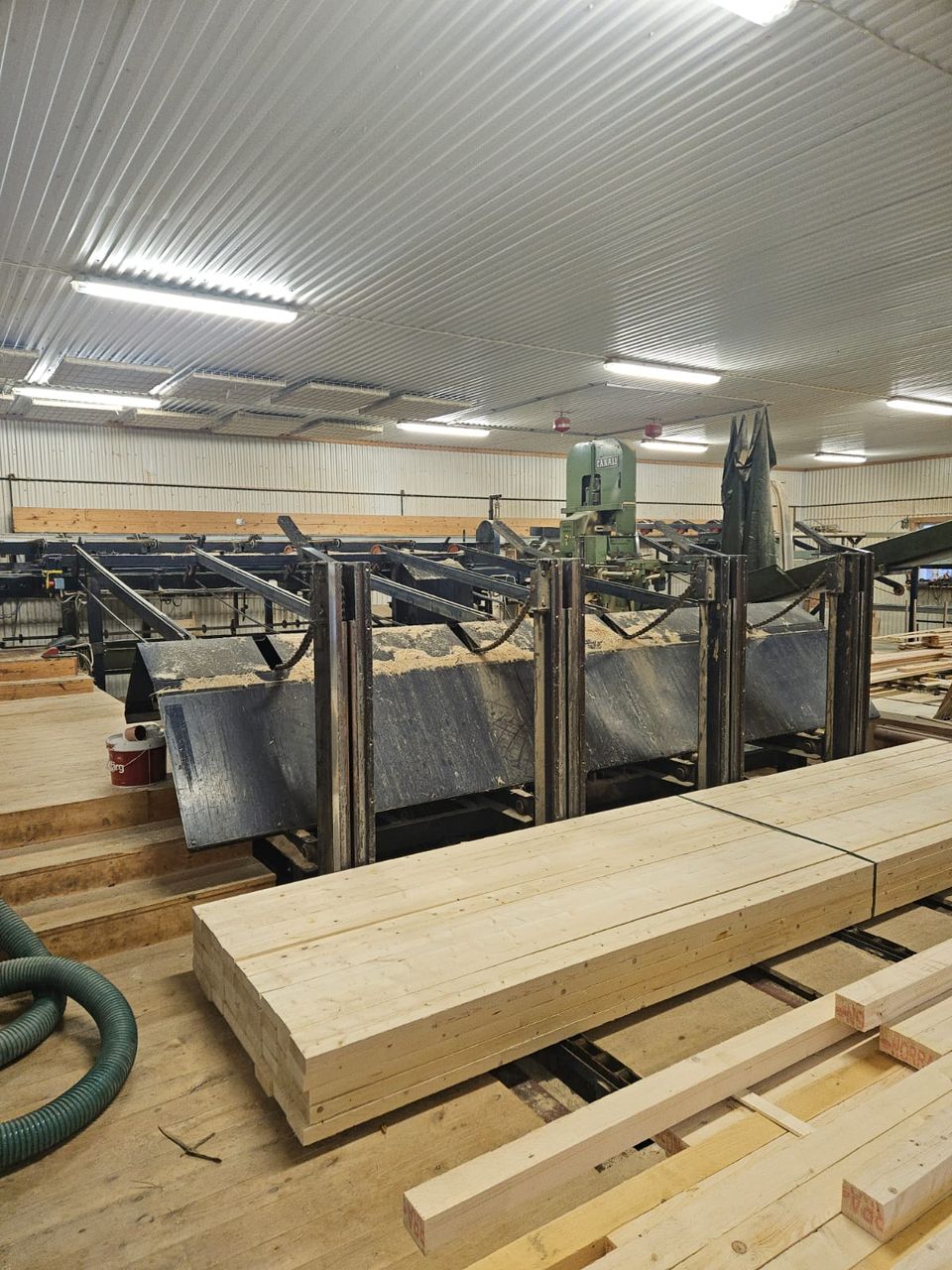
The Dream of Your Own Sawmill – What Does It Actually Cost?
Anyone who works in forestry, or simply wants to turn their own timber into usable lumber, eventually asks the same question: what does a used sawmill cost, and does the numbers actually work out? The short answer is that a used sawmill cuts the investment threshold dramatically compared to buying new — but profitability depends just as much on how you run the machine as on the purchase price. This article walks through pricing, the factors that actually drive profitability, and a simple calculation example you can build on. The goal isn't a single exact answer — there are too many local variables for that — but a framework you can run with your own numbers.
Used Sawmill Cost: Typical Price Range
A new mobile band sawmill typically costs between 30,000 and 300,000 SEK today, depending on capacity, automation and brand. A used sawmill, according to market overviews, usually falls in the 15,000–100,000 SEK range — a substantial discount compared to buying new, while a well-maintained used machine often keeps working for many years to come. The spread between price points mostly comes down to cutting width, motor power, whether the mill is stationary or mobile, and how much peripheral equipment (blades, hydraulics, measuring gear) is included. For anyone sawing for their own needs or on a smaller scale, a used sawmill is often the most rational starting point — the money saved on the purchase can instead go toward blades, maintenance and perhaps a simple drying setup.
Profitability Factors to Account For
Profitability in a sawmill business rests on three legs in practice, plus your own labor:
- Low investment cost – the less capital tied up in the machine, the faster it pays for itself.
- Raw material at cost price – if you own or have access to your own forest, timber cost is in practice just harvesting and transport, not market price for sawlogs.
- Local market and demand – lumber yards, builders, hobby farms and private buyers wanting rough-cut timber, fencing or decking material exist almost everywhere, and contract sawing for neighbors can become a small income stream of its own.
There's a fourth, often underrated factor too: your own time. A sawmill doesn't run itself — changing blades, maintenance, stacking and drying the timber all take time, and that time is effectively a cost even if it never shows up in the spreadsheet. Factoring in a realistic number of hours per cubic meter gives you a more honest picture of profitability, and saves you from disappointment when actual returns are compared against an overly optimistic back-of-envelope estimate.
Industry examples circulating among forest owners describe a roughly 250,000 SEK investment (machine plus peripherals) being earned back within the first year, when the owner both sawed their own timber and took on contract jobs for others. That's a best-case example, not a promise — but it shows what's possible when all three legs work together. With used equipment and a clear outlet for the sawn timber, a more realistic payback period tends to land at 2–4 years.
Calculation Example: Work Backwards From Volume
The simplest way to judge whether a used sawmill pays off is to work backwards from how much timber you actually plan to saw per year, and what each cubic meter is worth after processing.
A simplified example: sawing 40 cubic meters of logs per year, where each cubic meter adds roughly 800–1,200 SEK in processing value (the difference between sawn lumber and raw logs) after deducting blades, fuel and maintenance. That gives an annual margin of 32,000–48,000 SEK. With a used sawmill bought for 60,000 SEK, the payback period then works out to roughly 1.5–2 years — assuming you have an outlet for the timber and time to saw it. Add contract sawing or selling sawn lumber to others, and the math can move faster. Always treat this as a model to adjust to your own volumes, prices and local market — not a guarantee.
A second scenario: if you only saw 15–20 cubic meters a year for your own use, the processing value in kronor is lower, but you also avoid buying market-priced lumber for your own building projects — which is itself a form of return, just one that never shows up as revenue on paper. Many small-scale owners therefore calculate both pure profitability and what they save by not buying finished lumber.
Band Saw, Circular Saw or a Complete Line?
Which type of sawmill suits you best depends on volume and ambition:
- A band sawmill is the most common choice for small-scale or mobile sawing — a narrow kerf, low waste and relatively easy to operate solo. For anyone sawing for their own needs or on a smaller scale, machines like our AKE 1400 twin band saw or a log band saw with carriage are often the most logical starting point.
- A circular saw works better once volumes grow and you prioritize throughput over minimal waste.
- A complete line — planer and saw line in sequence — becomes relevant once production grows and you want to process the timber further yourself, for example with a complete planer line. This is where used equipment makes the biggest difference, since a new complete line quickly reaches a completely different investment level.
Wherever you are on that ladder, it pays to compare several used units before buying — condition, hours in service and available spare parts affect the real total cost at least as much as the asking price does. You'll find our full range of used sawmills and woodworking machines in the machine catalog.
FAQ
What does a used sawmill cost compared to new?
A new mobile band sawmill often costs 30,000–300,000 SEK, while a used sawmill, according to market overviews, usually sits at 15,000–100,000 SEK depending on condition, capacity and included equipment.
How long a payback period is realistic for a used sawmill?
With used equipment, your own raw material and a clear outlet for the timber, a realistic payback period tends to land at 2–4 years. Individual industry examples show faster payback, but that assumes high utilization and favorable prices.
Is contract sawing worth it as extra income?
Yes — for many owners, contract sawing for neighbors and local customers becomes a meaningful part of profitability, since the machine is already paying for itself through personal use, and each extra job then adds almost pure margin.