 RICHARD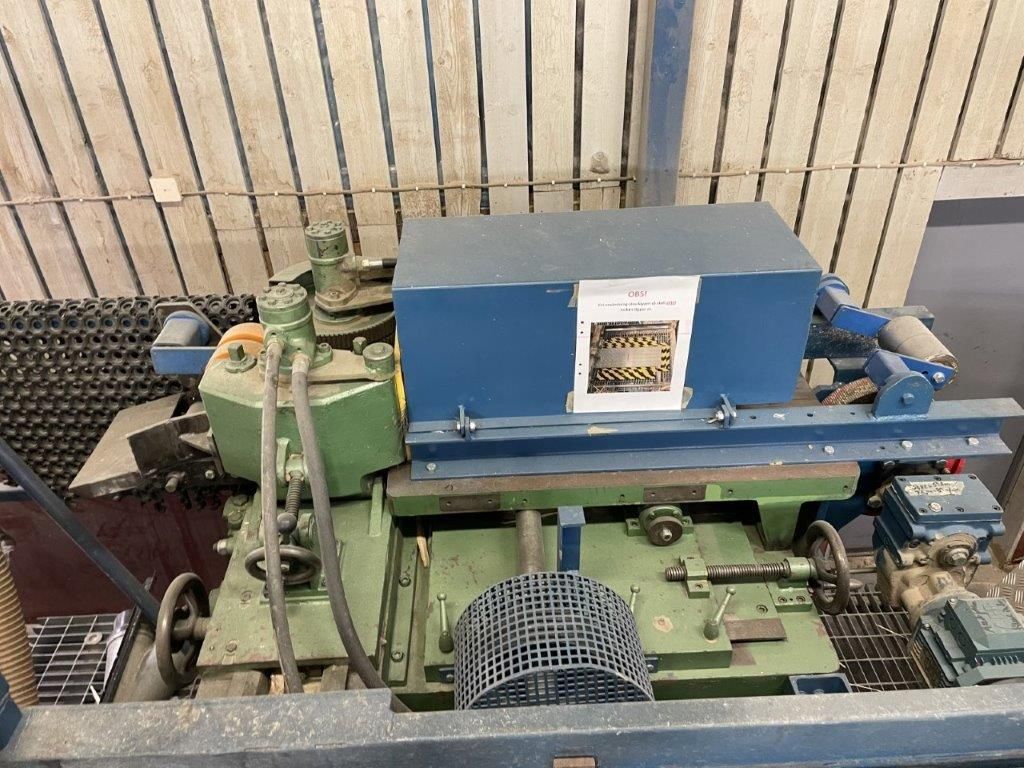
Splitting Saws: How to Compare Models and Years
Choosing the right splitting saw for your sawmill or joinery is rarely about finding the "best" machine on the market. It's about finding the model and vintage that fits your production, your timber, and your budget. Used splitting saws span a wide range — from simple mechanical splitters to hydraulic systems with automatic feeding — and performance differences can be significant even between machines that look similar in a listing photo.
This article walks through the parameters you should actually compare when weighing different models and years against each other.
Splitting Principle: Mechanical, Hydraulic, or Saw-Based
The first thing to look at is how the machine actually splits the timber. A hydraulic splitting saw works with a piston that pushes or presses the timber apart, often providing a robust and reliable solution for larger dimensions and harder wood. Saw-based splitters, such as the Melberg 6 H, instead use one or more saw blades to divide the timber into desired dimensions — better suited when you want precise, even surfaces and control over waste.
If you're specifically after pith splitting, for example to avoid cracking in logs, a dedicated pith splitter like the Lindsaw SS-8 is a different consideration entirely — here you compare splitting force and feed systems rather than blade type.
The takeaway: never compare price and age alone without first establishing which splitting principle matches your production flow.
Capacity and Dimensions
Once the splitting principle is settled, capacity becomes the next comparison point. Note:
- Maximum timber diameter/dimension the machine can handle.
- Splitting force, often specified in tons for hydraulic systems.
- Number of splits per cycle — some machines split into multiple pieces simultaneously, significantly affecting capacity.
- Feed speed, which determines how many cubic meters per hour you can realistically produce.
An older machine with lower splitting force may still be fully sufficient if your timber is slender and your volume limited. Conversely, it's wasteful to pay for high capacity if production never comes close to the machine's ceiling.
Automation Level and Feed Systems
Vintage often reflects automation level more than pure mechanical quality. Older splitting saws often require manual feeding and removal, while newer or upgraded machines have motorized infeed, sometimes coupled with a separate feed unit. Ask yourself:
- How much manual labor is required per shift?
- Is it possible to retrofit automatic feeding later?
- Is the control system (if any) easy to understand and maintain, or does it require specialist expertise?
A machine from the early 2000s with simple PLC control can in practice be more reliable than an older fully mechanical design, since spare parts and PLC knowledge are generally easier to find today.
Condition, Maintenance History, and Wear Parts
Age only tells half the story — condition and maintenance tell the rest. A 20-year-old splitting saw serviced regularly can be in better shape than a 10-year-old machine that's been idle or run hard without oversight. Always ask for:
- Service history and any replaced major components (hydraulic cylinder, pump, valves, wedges/blades).
- Recorded operating hours, if logged.
- Photos or inspection of wear parts such as splitting wedges, saw blades, guide rails, and bearings.
Hydraulic systems are especially worth scrutinizing — leaks, worn seals, and aged hydraulic oil are common and relatively costly to fix if neglected for a long time.
Electrical System, Safety, and Working Environment
Older splitting saws built before clear CE requirements may lack modern protections such as multi-position emergency stops, guards around the splitting zone, or two-hand controls. Before comparing prices, check:
- Whether the machine is CE-marked or upgraded to meet Swedish workplace safety requirements.
- Whether the electrical cabinet and wiring are original or refurbished, and whether documentation exists.
- Whether emergency stops and guards function properly upon visual inspection.
This isn't just a safety issue but also an economic one — a machine requiring extensive safety upgrades can quickly become more expensive in total cost than a newer model with a higher purchase price.
Spare Parts Availability and Brand
Certain brands and models have good spare parts availability in the Nordics, while others — especially narrower import models — can mean long waits in case of breakdown. Before deciding, investigate:
- Whether the manufacturer is still active or has a representative in Sweden/the Nordics.
- Whether compatible parts exist from other manufacturers (e.g., standardized hydraulic components).
- How easy it is to find used spare parts from similar machines on the market.
A machine with good parts supply gives you lower operational risk over time, even if the purchase price itself is somewhat higher.
Making a Practical Comparison
When comparing several listings side by side, build a simple comparison table with:
- Splitting principle (hydraulic, mechanical, saw-based)
- Max dimension and splitting force
- Automation level and feed system
- Vintage and operating hours (if known)
- Condition of wear parts and hydraulics
- Safety status (CE, guards, emergency stops)
- Spare parts availability
- Price including any needed refurbishment
By systematically going through these points for each machine you're considering, it becomes clear which model actually offers the best value for your specific operation — not just the one that looks newest in the listing.
FAQ
Is a newer splitting saw always a safer purchase than an older one? Not automatically. An older machine that has been carefully maintained and possibly upgraded with modern safety guards can be a safer purchase than a younger machine that's been run hard without service. Always look at maintenance history rather than model year alone.
Which splitting principle works best for mixed timber in a smaller sawmill? For mixed dimensions and varying timber quality, a hydraulic splitting saw often offers the greatest flexibility, since splitting force can be adjusted. Saw-based splitters work better when you want exact, repeatable dimensions with minimal waste.
How much extra cost should I expect for safety upgrades on an older machine? It varies significantly depending on the machine, but basic measures like emergency stops, guards, and two-hand controls can in some cases cost as much as the price difference to a newer model. Always factor this into the total calculation before purchasing.