 RICHARD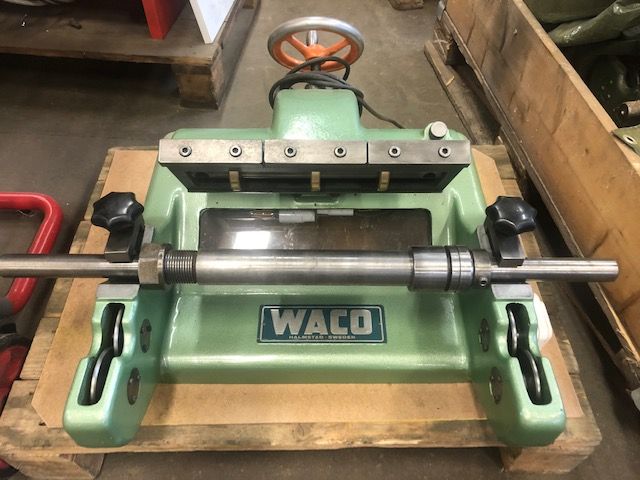
Why peripheral equipment often decides the sawmill's flow
It's rarely the main saw that causes the most downtime – it's usually something around it. A sticking cradle carriage, a log elevator that jumps its chain, or a chip fan that can't keep up with dust volume can cause more weekly production stops than the saw blade itself. Yet peripheral equipment gets the least attention in daily maintenance routines. Here are concrete tips from the shop floor – things we've seen work (and fail) in real sawmills.
Cradle carriages – the foundation for correct yield
A cradle carriage determines how the log is presented to the saw blade, and small deviations here are amplified throughout the entire production line. A few things worth checking regularly:
- Clamp parallelism. If the clamps aren't exactly parallel to the feed direction, you get crooked cuts from the very first pass, often unnoticed by the operator until yield statistics reveal it.
- Hydraulic response time. A cradle that releases clamping too late or too fast creates micro-shocks in the log that show up as warping in the finished board.
- Position sensor calibration. Check at least once a month that the digital position actually matches the real measured position – wear in chains and gears causes drift to creep in over time.
If you're considering replacing an old cradle, examples of used cradle carriages such as the WACO Siba model are often significantly overbuilt compared to newer, leaner designs – which in practice means fewer stoppages.
Log elevators – chain tension is everything
Elevators look simple on the surface, but most downtime comes down to the same three issues repeatedly:
- Wrong chain tension. Too slack and the chain jumps under load spikes; too tight and bearings wear out prematurely. Check tension with the chain unloaded, not while running.
- Poor lubrication in cold spaces. If the elevator sits in a drafty or cold area, grease stiffens faster than you'd expect. Switch to a lower-temperature-rated lubricant if you run through winter.
- Skewed buckets or dogs. Even slight misalignment causes imbalance that compounds every rotation and wears out the drive shaft prematurely.
When refurbishing or buying a used log elevator from ALMAB, it's worth carefully inspecting bearing housings and chain wheels before installation – that's usually where the hidden costs are hiding.
Chip fans – sizing and maintenance that saves money
An undersized or clogged chip fan costs more than it appears to on paper. The symptoms are rarely dramatic at first – it starts with a bit more dust in the room, then declining capacity, and eventually a stop right in the middle of an order.
- Check the ductwork at least quarterly. Sharp bends and overly long straight runs without cleanout access increase pressure drop more than most people expect.
- Listen to the motor sound. A fan that sounds heavier than usual is often running against a partially blocked filter or a damper stuck in the wrong position.
- Replace bearings proactively. A fan wheel running unbalanced for too long quickly wears out motor bearings – a preventive swap is cheaper than an emergency failure mid-shift.
If you're considering an upgrade, used chip fans often handle considerably higher capacity than a smaller facility needs daily – giving extra margin during production peaks.
Conveyors – the silent bottleneck source
Chain conveyors and belt transporters rarely show up in production statistics, but they're often the actual limiting factor for how much timber can move through a line per hour. Keep an eye on:
- Belt tension and skew. A slipping belt creates invisible delays that accumulate throughout the shift.
- Roller bearing noise. A squealing idler bearing is the most common early warning of an upcoming stoppage.
- Load balance. Unevenly distributed goods on a conveyor increase wear asymmetrically and shorten drive-side lifespan.
Daily shop-floor checklist
- Visually check elevator chain tension at shift start.
- Listen for abnormal sounds in fans and conveyors during startup.
- Note abnormal dust or chip buildup around fan inlets.
- Inspect cradle carriage clamps and position sensors weekly.
- Log deviations even when they seem minor – patterns often only appear after several weeks.
By giving as much care to peripheral equipment as to the saw blade itself, you'll significantly reduce unplanned downtime, with immediate effects on both yield and delivery reliability.
FAQ
How often should you check chain tension on a log elevator? A quick visual check should be done at every shift start, while a more thorough measurement with the chain unloaded should be done at least once a month, or more often during high production periods.
What signs indicate that a chip fan is undersized? Increasing dust buildup in the room, slower chip removal, and heavier motor noise are clear early signs. If this persists despite cleaned ducts, capacity should be reviewed.
Is it worth buying used peripheral equipment instead of new? Often yes – many older designs are more heavily built than modern equivalents, giving longer service life and fewer stoppages, provided bearings and drivetrains are carefully inspected before purchase.