 RICHARD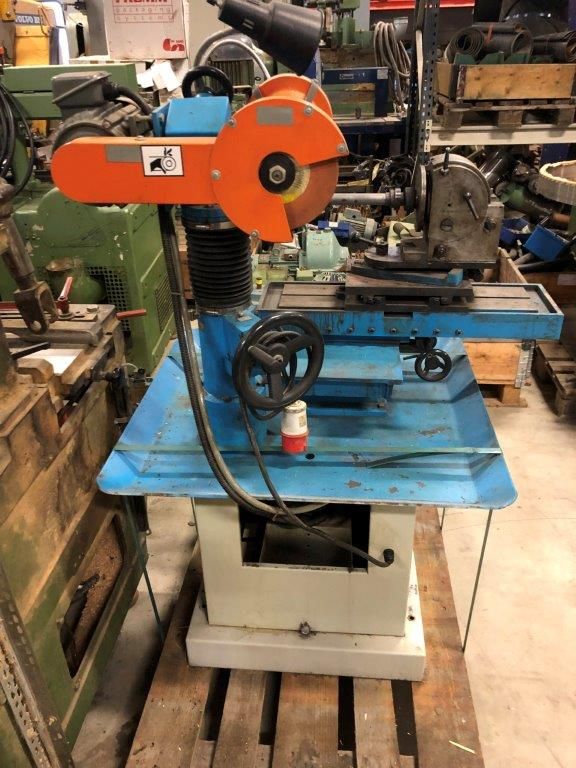
Dull Blades Cost More Than You Think
Sharpening planer knives isn't something you think about until the surface finish gets worse, the motor draws more power, and stoppages become more frequent. A dull blade tears more than it cuts — it leaves rougher, more splintered edges and forces the planer to work harder for the same result. In a sawmill or joinery workshop, that shows up fast in both the power bill and scrap rate. The question is rarely whether the knives need sharpening, but how — send them to a sharpening service, do it yourself by hand, or invest in your own grinding machine. The answer mostly comes down to volume and what downtime costs you.
What Does Sharpening Service Cost?
According to Swedish sharpening shops' price lists, sharpening planer knives to true and flat typically runs around SEK 6 per centimeter of blade length — a standard hand plane iron usually lands around SEK 79 per piece as a standard job. Saw blades cost more and vary widely, roughly SEK 100–500 per blade depending on tooth count and tooth shape; a fine-toothed cross-cut blade costs more to re-sharpen than a coarse timber blade with few teeth. Then there's logistics. Do you post the blades back and forth, or drop them off locally? Count the shipping time as downtime unless you keep a spare set of knives to swap in — otherwise the machine sits idle until the package comes back.
Sharpening by Hand or a Hobby Setup
For anyone who only sharpens the occasional blade, there are plenty of hobby-level solutions. A bench grinder like a Tormek with the right jig costs somewhere around SEK 5,000–6,000 and can handle hand plane irons and smaller blades without a big investment. But according to experiences shared on industry forums, the result is often uneven compared to a proper sharpening service — holding a consistent angle across the whole edge is harder than it looks, and it takes considerably more hours than expected, especially at first. For a hobbyist who sharpens a couple of times a month, it can still pay off financially, as long as you're prepared for the learning curve and accept that the quality rarely matches professional sharpening outright.
When Does Your Own Grinding Machine Pay Off?
The picture changes as volume increases. A workshop that sharpens planer knives or saw blades every week — or several times a week — starts to benefit from owning the equipment outright. The arguments workshops that have gone this route usually make: the edge comes out the same every time, there's no waiting on the post or a drop-off, and you no longer need to keep spare knife sets "just in case" a package is delayed. It's also easier to sharpen exactly when production needs it, not when the sharpening shop has an opening. This is where a proper workshop grinder like a universal grinding machine starts to make sense — for example a Holytek universal grinding machine or a Jonsered SL-10 E grinding machine, both built to handle planer knives and similar tools in a workshop setting, not just occasional hobby sharpening. For anyone sharpening more advanced profiles or wanting higher precision, German brands like Stehle and Schneeberger tend to come up in the same conversation — we regularly stock Stehle/Schneeberger grinding machines, and they're a reasonable benchmark for what a professional sharpening setup costs used.
Break-even Example: Where's the Tipping Point?
Take a workshop that sends off, say, 15 hand plane irons and 4 saw blades to a sharpening service every month. Using the price list above (roughly SEK 79/piece for plane irons, say SEK 250 average per blade), the running cost lands around SEK 2,185 a month, plus shipping and whatever downtime that involves if there's no spare set of knives. Over a year that's more than SEK 26,000 — just in sharpening fees, before counting the value of waiting time. A used universal grinding machine in the price range of a newer car could then be paid off within a couple of years, all else equal. The condition, of course, is that the volume is actually there: a workshop that only sharpens the occasional blade a few times a year rarely benefits from owning the machine, while a workshop with steady, recurring sharpening often does. The best way to work this out for your own operation is to add up what you actually send out over three or four months and compare it with what a used machine would cost to own and maintain. Want to see what's available right now? Start in the machine catalog and filter by grinding machines.
FAQ
How much does it cost to sharpen planer knives?
According to price lists from Swedish sharpening shops, sharpening to true and flat often costs around SEK 6 per centimeter, or roughly SEK 79 for a standard hand plane iron. Saw blades cost more, typically SEK 100–500 depending on tooth count and shape.
Is it worth buying your own grinding machine for planer knives?
It depends on volume. If you sharpen every week or more often, owning a machine usually pays off over time through consistent results and no waiting, while occasional sharpening is often cheaper to leave to a sharpening service.
Can you sharpen planer knives yourself by hand?
Yes, with the right jig and something like a Tormek-style bench grinder it's doable, but according to experiences shared on industry forums the result is often less consistent than professional sharpening, and it takes longer than expected, especially before you've learned the technique.