 RICHARD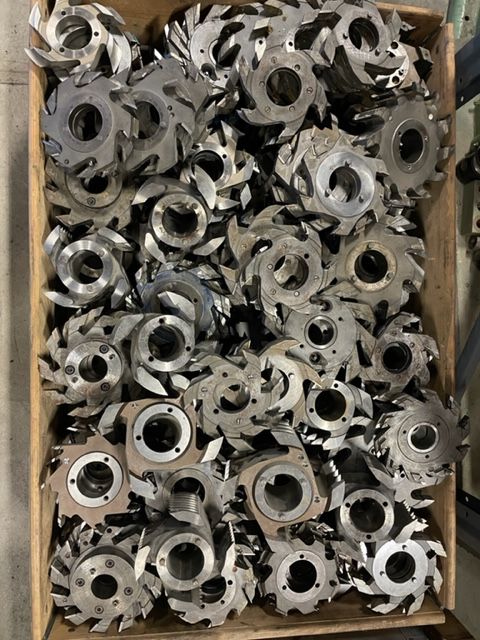
Why safety around planers matters
The planer is one of the machines in a sawmill or joinery workshop where mistakes turn into serious consequences the fastest. High-speed rotating cutter blocks, powerful feed speeds and large volumes of shavings and dust mean that both acute accidents and long-term health issues are real risks if the machine and the surrounding work environment aren't managed correctly. Whether you're running an older model like the Jonsered H571 KB or a newer planer, the basic safety principles are the same — though the risk profile can differ depending on the machine's age and design.
In this article we go through the most common risks around planers, what guards and routines should be in place, and what to consider when buying or operating used equipment.
The most common risks when planing
Rotating tooling and the cutter block
The cutter head rotates at high speed and is the most obvious danger. Contact with the tool can cause severe cutting injuries in seconds. This applies especially when changing planer knives or cleaning the machine, which must be completely powered off and de-energized before anyone approaches the cutter block. Tooling such as planer knives and round cutters (see for example /en/maskiner/RP-65003) should always be handled with edge guards on during transport and storage, not only while mounted in the machine.
Kickback and material ejection
If timber is fed incorrectly, or if there are knots, internal stresses or unevenness in the wood, the workpiece can be thrown back toward the operator with great force. This is one of the most common causes of serious accidents at planers and highlights the importance of correct infeed equipment. A well-functioning planer infeed (such as /en/maskiner/RP-34002) significantly reduces the risk of kickback by guiding the timber straight and stably into the machine.
Noise and vibration
Planers generate high noise levels, often above the limits that require hearing protection under occupational safety regulations. Long-term exposure without protection leads to permanent hearing loss. Vibrations from feed rollers and the spindle can also cause strain injuries over time with daily handling.
Dust and shavings
Fine wood dust isn't just a respiratory hazard — it's also a significant fire and explosion risk if it accumulates in large quantities. A planer without a properly working extraction system spreads dust throughout the facility, increasing exposure for everyone nearby, not just the operator.
Guards and measures that should be in place
- Fixed and movable guards over the cutter block and feed rollers, so no one can come into contact with rotating parts during operation.
- Emergency stops that are easy to reach from the operator's normal working position, with regular functional checks.
- Extraction connection sized for the machine's capacity, connected to a properly working dust system throughout the facility.
- Personal protective equipment: hearing protection, respiratory protection when exposed to dust, and cut-resistant gloves when changing knives (never during actual planing).
- Clear marking of risk zones around the machine and an unobstructed path for feeding and removing timber.
Maintenance as part of safety work
Safety isn't only about guards and routines in the moment — it's equally about the machine being in the condition it should be. Worn feed rollers, poorly adjusted fence rails, or damage to guard covers significantly increase the risk of accidents. Regular checks of:
- Sharpness and balance of planer knives and cutters
- Function of safety switches and emergency stops
- Condition of conveyors and infeed equipment
- Extraction efficiency and any leaks in the ducting
should be a fixed part of preventive maintenance. Many serious incidents can be traced back to neglected maintenance rather than the operator's actions in the moment.
Older machines — extra important to consider
Many sawmills and joineries continue running older, robust planers such as the Jonsered H-45 KN, since they still deliver good performance at a reasonable investment cost. It's entirely possible to run these machines safely, but it requires extra attention to ensuring guards and emergency stops meet today's requirements, even if the machine was originally built to an older standard. When buying a used planer, you should therefore always review the safety equipment and upgrade as needed before putting the machine into operation.
Training and routines for staff
No machine, however well guarded, compensates for a lack of knowledge in the person operating it. All operators should have completed practical training specific to the machine they will use, including:
- Safe feeding and handling of different timber dimensions
- Routines for stopping, clearing jams and changing tooling
- What to do in case of alarms, emergency stops or abnormal noise/vibration
Written checklists for daily start-up and shutdown are a simple but effective way to ensure basic safety checks are never forgotten during high-pressure production periods.
Summary
Planer safety rests on three pillars: functioning guards and emergency stops, well-maintained equipment, and competent, trained staff. By combining correct infeed equipment, regular inspection of tooling such as planer knives and round cutters, and clear routines, you reduce the risk of both acute accidents and long-term work environment problems — regardless of whether the machine is new or has a few years on the clock.
FAQ
What are the most common causes of accidents at planers? The most common causes are contact with the rotating cutter block during tool changes or cleaning, and kickback caused by incorrect feeding or timber with internal stresses and knots.
Is hearing protection enough to meet work environment requirements when planing? No, hearing protection is an important part but only one piece of the whole. Functioning machine guards, emergency stops, extraction and trained staff are all required at the same time to meet occupational safety requirements.
Can older used planers be run safely? Yes, provided that guards, emergency stops and extraction either already meet current requirements or are upgraded before the machine is put into operation. A review at the time of purchasing a used planer is always recommended.