 RICHARD
Safety and Work Environment Around Grinding Machines
Grinding machines are a central part of both sawmills and joinery workshops – they keep cutters, knives, and saw blades sharp and ensure that production runs without unnecessary stoppages. But precisely because they handle rotating cutting tools with high precision, they also carry specific risks that must be taken seriously. A well-thought-out work environment around the grinding machine protects both personnel and production economy.
Common risks when working with grinding machines
Most accidents around grinding machines involve three things: contact with rotating parts, flying particles, and noise. Grinding wheels and belts rotate at high speed, and if an operator gets too close without protection, the consequences can be severe. Grinding dust and metal particles thrown off during machining of steel or carbide tools are another risk factor, particularly for the eyes and respiratory system.
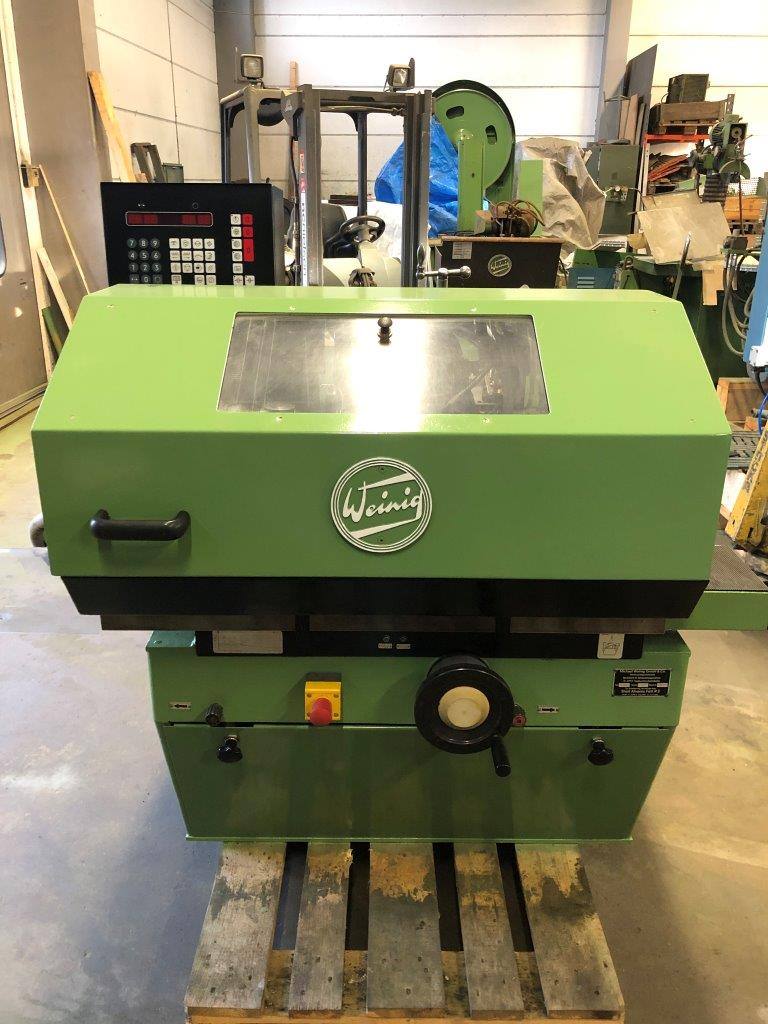
Machines such as the Weinig R 912 and the Jonsered SL-10 E are built for continuous operation in industrial environments, which means they are often run for long shifts. This places higher demands on guards, ventilation, and routines working reliably day after day – not just at installation.
Personal protective equipment – the foundation of daily work
No matter how well a machine is mechanically guarded, personal protective equipment is always needed when working near grinding machines:
- Safety glasses or a face shield – mandatory for all grinding, since sparks and particles can fly far.
- Hearing protection – grinding machines often generate noise above 85 dB(A), the threshold at which hearing protection is required under Swedish work environment regulations.
- Respiratory protection – especially important during dry grinding without effective local exhaust, as fine particles otherwise spread into the workshop air.
- Close-fitting work clothes – loose sleeves or scarves can get caught in rotating parts.
For universal machines like the Holytek, which are often used for several different types of tools and knife steel, it's especially important that protective equipment is adapted to whatever material is currently being processed.
Machine safety and mechanical guards
An older grinding machine may still be fully functional mechanically, but it's worth checking that it meets today's protection requirements. Important points to review:
- Fixed and movable covers around the grinding wheel or belt should always be installed and in good condition.
- Emergency stops should be easily accessible and work flawlessly – test them regularly.
- Start interlocks that prevent accidental starts, for example during tool changes, are a minimum requirement.
- Extraction systems connected to the machine reduce both fire risk from grinding dust and exposure to airborne particles.
When purchasing used equipment, for example tools that need sharpening and maintenance using planer cutters and round cutters, it's wise to ensure that the entire chain – from tool handling to grinding – has clear safety routines. A grinding machine rarely functions in isolation but is part of a larger workflow.
Routines and training for staff
Technical safety isn't enough if staff lack knowledge about the risks. Basic routines that should exist in every workshop:
- Induction for new employees – no one should operate a grinding machine without a briefing on the machine's specific risks.
- Clear instructions for tool changes, setup, and cleaning, preferably posted at the machine.
- Regular inspection of guards, wiring, and wear on grinding wheels or belts.
- Incident reporting – even minor incidents should be documented to detect patterns before a serious accident occurs.
It's also worth scheduling shorter breaks during intensive grinding work, both to reduce strain injuries in hands and arms and to maintain concentration throughout the shift.
Ergonomics at the grinding station
Grinding machines are often used standing for extended periods, making ergonomics important. The workbench height should be adjusted so the operator doesn't need to bend over the machine, and lighting should be sufficient to avoid leaning in close to see details. Vibrations from certain handheld grinding tools can also be a risk with repeated work, and job rotation should be considered here to reduce exposure time per person.
Legal requirements and responsibility
Under the Swedish Work Environment Act, it is the employer's responsibility to ensure that machines are safe to use and that staff have the right knowledge and protective equipment. The Swedish Work Environment Authority's regulations on the use of work equipment (AFS 2006:4) apply specifically to machines such as grinding machines, and CE marking and an operating manual should always be available – even for used equipment. When in doubt about a specific machine's protective status, it's always better to consult a professional before putting the machine into operation.
Checklist before daily operation
- Check that all guards are in place
- Test the emergency stop
- Ensure extraction is working
- Check the condition of the grinding wheel/belt
- Confirm that personal protective equipment is used correctly
A safe work environment around grinding machines rarely comes down to one big effort, but rather maintaining good habits every day. With the right protection, clear routines, and continuous follow-up, the grinding station becomes a safe and efficient part of production – whether the machine is new or has many years of service behind it.
FAQ
What protective equipment is always required when working with grinding machines? Safety glasses or a face shield along with hearing protection are essentially always mandatory. Depending on material and grinding method, respiratory protection and close-fitting work clothes are often also needed.
How often should guards and emergency stops on a grinding machine be checked? Daily visual checks are recommended, with a more thorough review of guards, wiring, and function at least once a month or according to the manufacturer's maintenance schedule.
Do the same safety requirements apply to used grinding machines as to new ones? Yes, the Work Environment Authority's requirements apply regardless of the machine's age. It is the employer's responsibility to ensure that even used equipment meets current protection requirements before it is put into use.