 RICHARD
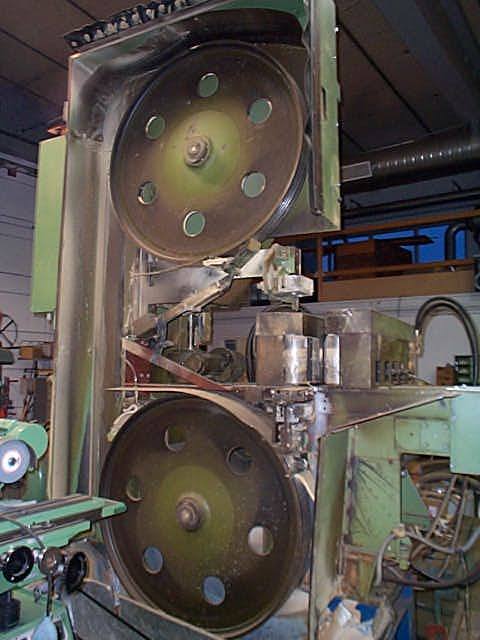
Safety and Work Environment Around Bandsaws
The bandsaw is the workhorse of the sawmill and joinery shop – capable of handling everything from rough logs to precision cutting. But precisely because the machine is so flexible and often run at high pace, it is also one of the places where accidents easily occur if routines and guards are not in order. This article covers what you, as responsible for the work environment, should consider when bandsaws, cut-off saws and similar sawing equipment are part of the production.
Common risk factors around bandsaws
Most accidents around bandsaws involve a handful of recurring situations:
- Pinch risk at feed-in – hands and fingers get too close to the blade when timber is fed manually.
- Kickback/whip risk – an incorrectly tensioned blade or poorly maintained guides can cause the blade to whip or jump.
- Slip and trip accidents – chips, sawdust and oil on the floor around the machine are a classic source of risk.
- Noise and vibration – long-term exposure without hearing protection causes permanent damage.
- Dust exposure – fine wood dust is both a health risk and a fire risk.
An older but well-maintained bandsaw, for example a Canali TB 1100, can be at least as safe as a newer machine – provided guards, emergency stops and maintenance are in order. It is therefore not only about the machine's age but about how it is maintained and operated on a daily basis.
Machine guards and emergency stops
All bandsaws should have fixed and movable guards covering the blade except where the timber is actually being processed. Check regularly that:
- Guards remain in place and have not been removed "to save time" without them.
- Emergency stops are easily accessible from the operator's normal working position and function correctly – test them weekly.
- Doors and covers to drive belts and motors are locked or fitted with switches that stop the machine when opened.
- Blade tension is checked according to the manufacturer's instructions, especially after blade changes.
For saws with cross-cutting functions, such as a Prinz/Farson cut-off saw, additional risks arise around the cutting cycle where timber is moved and cut in rapid succession – here foot pedals and two-hand controls are especially important safety measures.
Ergonomics in manual feeding
Many smaller and older bandsaws still require manual feeding of timber. This places demands on:
- Correct working height so the operator does not need to bend or reach over the blade.
- Good lighting over the saw table to avoid misjudging the position of the timber.
- Roller tables or support tables that reduce heavy lifting during infeed and outfeed, ideally combined with package roller conveyors where the flow allows it.
- Clear floor markings showing where the operator should stand and where the risk zone begins.
If production runs in multiple shifts, it is especially important that the working posture does not strain the back and shoulders over time – ergonomic shortcomings rarely cause acute accidents but instead lead to more sick leave in the long run.
Noise, dust and ventilation
Bandsaws and surrounding equipment generate significant amounts of noise and dust. Basic measures include:
- Hearing protection should be mandatory in the saw area, not just "when needed".
- Point extraction at the saw head significantly reduces dust spread compared to general ventilation alone.
- Chip extraction fans and extraction systems, such as chip extraction fans, must be sized for the entire machine fleet and maintained as carefully as the saw itself – a poorly functioning extraction system increases both dust and fire risk.
- Regular cleaning of floors and surfaces reduces the amount of dust stirred up during operation.
Maintenance as a safety measure
Maintenance is not just a production issue – it is one of the most important safety measures for bandsaws. Neglected maintenance increases the risk of:
- Blade breakage due to worn wheels or incorrect tension.
- Unexpected stoppages that force improvised, risky solutions.
- Hydraulic oil leaks that make the floor slippery.
Build daily and weekly checkpoints into your routines: blade tension, guards, emergency stops, oil levels and general condition. Document the checks – this facilitates both work environment audits and any incident investigations.
Training and routines
No machine is safer than the person operating it. Basic requirements for a safe bandsaw environment:
- All operators should receive hands-on training on the specific machine model they use, not just general saw training.
- Written routines for blade changes, cleaning and emergency stops should be available at the machine.
- New employees should never operate a bandsaw alone before being approved by an experienced colleague or supervisor.
- When purchasing used equipment, check that CE marking and Swedish user manuals exist, or supplement them if needed.
In a complete production line, for example a complete sawmill line, safety work becomes even more important since several machines and conveyor systems interact – a disturbance at one machine can quickly create risky situations further down the flow.
Summary
Safety around bandsaws is rarely about one single major measure, but about many smaller routines that together build a safe working environment: functioning guards, proper ergonomics, good extraction, regular maintenance and thoughtful training. Investing in used equipment can absolutely achieve a high level of safety – but guards, emergency stops and maintenance routines must be part of the deal from the start.
FAQ
Must used bandsaws meet the same safety requirements as new ones? Yes. Regardless of age, the machine must meet applicable work environment requirements, have functioning guards and emergency stops, and be CE marked or supplemented according to Swedish regulations before being put into operation.
How often should emergency stops and guards be checked? A simple functional check should be done weekly, with a more thorough review during planned maintenance, at least quarterly or according to the manufacturer's recommendation.
What protective equipment is most important when working with a bandsaw? Hearing protection, a dust mask or respirator when sawdust is dry, and close-fitting work clothes without loose parts that could get caught in the machine are basic requirements.