 RICHARD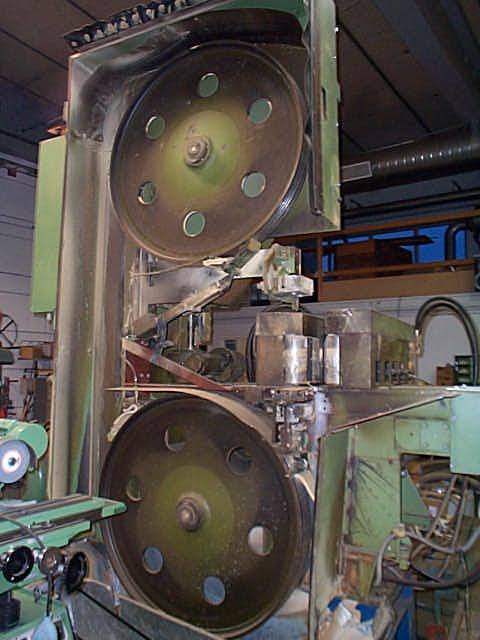
Safety and Work Environment Around Band Saws
The band saw is one of the most widely used machines in sawmills and joinery workshops, yet it's also one of the machine types where work environment issues often take a back seat to production demands. A long, fast-moving blade, heavy logs or timber packs in motion, and high noise levels mean that both the equipment and the working routines need to meet a high standard. In this article we go through the most common risks around band saws and what you, as an owner or supervisor, can do to reduce them – whether you're running a simple band saw or a full double band saw line.
Why the band saw demands extra attention
Unlike many other saw types, the band saw has a long, continuous blade running between wheels at high speed. This means the risk of blade breakage, kickback injuries and pinch points differs from, for example, circular saws. In addition, heavy and awkward workpieces – logs, planks or beams – are often handled, meaning that both machine safety and material handling need to work together.
A modern band saw such as the Canali TB 1100 band saw is built with guards around the blade path and wheels, but those guards are useless if they're removed, misaligned, or if operators aren't trained in how the machine should be used. It's the combination of the right machine, the right guarding and the right routines that creates a safe workplace.
The most common risk factors
1. Blade contact and kickback risk The single biggest risk factor is contact with the moving blade, especially during feeding, adjustment or clearing of sawdust. Many serious near-misses don't happen during normal operation but during disturbances – when the operator tries to quickly fix a problem without properly shutting down the machine.
2. Pinch risks during material handling Logs and packs being fed in or out of the saw, manually or via carriages and roller conveyors, create pinch risks between material and machine parts. This is especially true for double band saws, where material passes through multiple saw lines simultaneously, such as an AKE 1400 double band saw, where the workflow requires clear safety zones around the entire machine.
3. Noise and vibration Band saws generate continuous noise, often above hearing protection thresholds. Long-term exposure without protection is one of the most common causes of work-related hearing damage in the sawmill industry.
4. Dust and sawdust Airborne sawdust doesn't just affect the work environment – it can also be a fire hazard if extraction isn't working properly. A well-functioning dust extraction system, connected for example to dust extraction fans, is essential for both work environment and fire safety around the band saw station.
Concrete measures for a safer band saw
Guards and shutdowns All moving parts – blade, wheels, drive belts – should be fitted with fixed or movable guards that can only be opened with tools or through a locked system. Emergency stops should be within reach from multiple positions around the machine, not just at the control panel.
Maintenance and blade-change routines Blade changes and tensioning adjustments should always be done with the machine fully shut down and locked out (lock-out/tag-out). This is one of the most common situations where accidents occur, since the work is often done under time pressure.
Training and authorization Only trained personnel should operate the band saw, and new employees should always go through hands-on introduction before working independently. This also applies when buying used equipment – an older machine may have different control logic than what the operator is used to.
Personal protective equipment Hearing protection, safety glasses and, in some cases, respiratory protection should be standard at the band saw station. Loose clothing, jewelry and long loose hair should be avoided near the rotating blade.
Ergonomics in material handling Heavy lifting should be minimized through mechanical handling – roller conveyors, carriages or lifting aids. This not only reduces strain injuries but also the risk of the operator ending up in dangerous positions near the blade.
Risk assessment – a living process
A risk assessment around the band saw shouldn't be a document written once and then filed away. It should be updated every time the machine is moved, rebuilt, or when new work tasks are introduced. When buying a used machine, it's especially important to do a full review of guards, emergency stops and electrical systems before putting it into operation, since standards and requirements may have changed since the machine was originally delivered.
Summary
Safety around band saws isn't about isolated measures but about systematic work covering the machine's physical guards, maintenance routines, staff competence and the surrounding work environment – including dust, noise and material flow. By combining well-maintained machines with clear routines, you create a workplace where productivity and safety can go hand in hand.
FAQ
What are the most common accident risks with a band saw? The most common risks are contact with the moving blade during feeding or maintenance, pinch risks during material handling, and exposure to noise and sawdust during prolonged work without protection.
How often should the band saw risk assessment be updated? The risk assessment should be reviewed continuously, and always updated after rebuilding, relocating the machine, staff changes, or installation of new auxiliary equipment that affects the workflow.
Does a used band saw need extra inspection before startup? Yes. Guards, emergency stops and electrical systems should always be fully reviewed before a used machine is put into operation, since safety standards may have changed since the machine was originally manufactured.