 RICHARD
Planers/Moulders: How to Compare Models and Production Years in This Category
Buying a used planer/moulder is one of the more decisive investments for a joinery or small sawmill. The difference between a ten-year-old machine in top condition and a twenty-five-year-old machine that has sat idle in storage can be enormous – even though both may be advertised as "working". To make a smart comparison, you need to know which factors actually affect performance, precision, and reliability over time.
Spindle Count and Configuration – the Foundation of Comparison
The first thing to compare is the number of spindles and their placement. A four-sided planer with a bottom spindle, two side spindles, and a top spindle lets you profile and calibrate in a single pass, saving time compared to simpler two-sided machines. More spindles, however, also mean more bearings, belts, and adjustment points that can wear – making maintenance history just as important as the configuration itself.
A machine like the WACO HM225/3000 represents a robust, more industrial configuration built for longer runs and thicker timber, while a model such as the Weinig U 17 is known for its precision and flexibility during profile changes – something often highly valued by joineries with varied production. Comparing these two archetypes gives a good sense of what separates a "production machine" from a "flexible workshop machine".
Production Year vs. Refurbishment Status
The production year tells you less than you'd think. A machine from the 1990s that has gone through professional refurbishment – new bearings, re-sharpened spindles, updated electrical control – can in practice be more reliable than a machine ten years newer that has been run hard without service. Always ask about:
- The last time spindles were balanced or re-sharpened
- Whether feed rollers and rubber coatings are original or replaced
- The history of the control cabinet and control system (analog vs. digital)
- Whether the machine has been in continuous operation or idle
A well-maintained older machine, such as a Jonsered H571 KB or Jonsered H-45 KN, can still deliver excellent surface finish if the mechanics have been kept in good shape – these Swedish-built planers were made for tough operating conditions and often have a solid base construction that can handle decades with proper care.
Table Length, Feed Speed, and Power Requirements
When comparing models against each other, always look at these three technical parameters side by side:
- Table length – determines what lumber lengths you can handle efficiently without support tables.
- Feed speed – higher speed increases capacity but often requires stronger motors and better dust extraction to avoid quality issues.
- Motor power per spindle – lower power may suffice for softwood but becomes a bottleneck with harder wood species or deeper cuts.
These figures vary greatly between manufacturers and production years, and this is where a direct comparison between, say, a German machine and a Swedish-built model becomes clear – German machines tend to prioritize precision and fine adjustment, while Swedish and Nordic constructions are often built for robustness during longer operating shifts.
Control Systems – Analog or Digital?
Older planers/moulders often have purely mechanical settings with hand wheels and scales, while newer or upgraded machines may have digital positioning systems for the spindles. Digital readout drastically reduces setup times during frequent profile changes, but also requires that the electronics are maintained and that spare parts remain available. If you're comparing two machines in the same price range, it's worth asking: can the control system be upgraded afterward, or is it locked to the manufacturer's original system?
Tooling and Peripheral Equipment Affect the Overall Economy
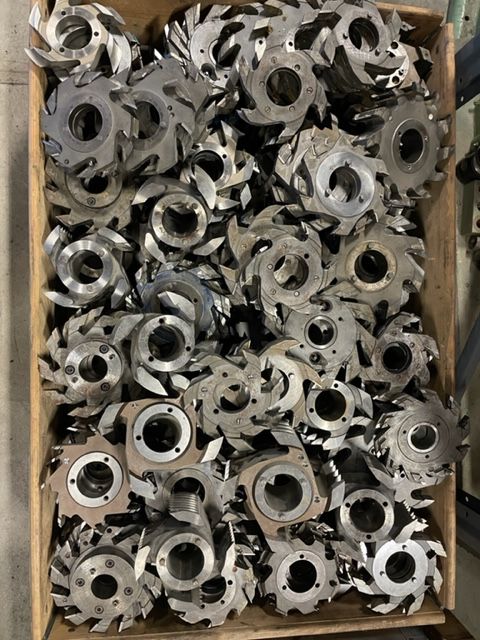
A planer/moulder is rarely an isolated investment. Cutterheads, round cutters, and knives often need to be replaced or supplemented depending on which machine you choose, and compatibility varies between brands. Before deciding, it's worth reviewing the available planer cutters and round cutters, since the price of accessories can affect total cost just as much as the machine price itself.
Checklist When Comparing Models
- Check the number of operating hours if a meter is present, otherwise estimate from the service log
- Ask for close-up photos of spindles and bearings, not just overview shots of the machine
- Compare actual table length and spindle spacing against your typical production length
- Ask whether the machine is sold with or without current profile knives
- Investigate whether spare parts are still manufactured or can easily be custom-made
If you want to see how the differences look in practice, it's worth comparing a more flexible machine like the Weinig U 17 against a heavier production-oriented model like the WACO HM225/3000 – both represent valid choices, but for different types of operations.
Summary
Comparing models and production years within the planer/moulder category is more about documented condition and configuration than a single year of manufacture. Prioritize spindle configuration, maintenance history, control systems, and access to compatible tooling – then you'll make a decision that holds up well beyond the warranty period.
FAQ
Is a newer planer/moulder always better than an older one? Not necessarily. An older machine with documented service and freshly sharpened spindles can outperform a younger machine lacking maintenance history. Focus on condition rather than year alone.
What's more important to compare between planer/moulder machines – spindle count or motor power? Both matter, but spindle count and configuration determine which operations you can perform in one pass, while motor power determines how fast and in which wood species you can work without quality loss.
Can I upgrade an older planer/moulder with digital control afterward? It depends on the brand and the control cabinet's design. Some machines can be upgraded with digital positioning systems, while others are locked to the original control – check this before purchase if it's an important feature for your production.