 RICHARD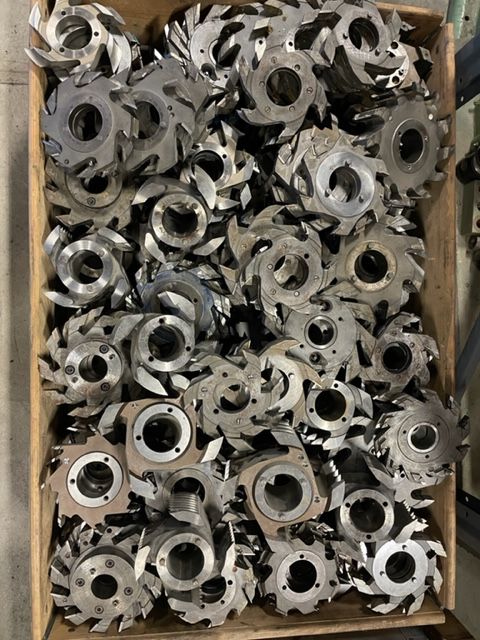
How to Compare Models and Years in the Moulder Category
Buying a used moulder (planer) is rarely about finding the "best" machine on the market — it's about finding the machine that fits your specific production flow, volume and budget. The challenge is that the moulder category spans everything from simple single-spindle models from the 1970s and 80s to modern four-sided planers with digital control. Comparing apples to apples requires knowing exactly what to look at.
In this article we walk through which parameters actually matter when comparing different moulder models and vintages, and how to avoid a comparison that only comes down to price.
What Actually Differentiates Moulders?
When you put two moulders side by side, it's easy to get stuck on brand and age. But the factors that actually determine productivity and fit in your shop are:
- Number of spindles — four spindles give you four-sided machining in one pass, saving time compared to two-spindle machines that require multiple runs.
- Motor power and feed speed — higher power allows faster feed without losing surface finish, especially important with thicker stock or hardwoods.
- Bed length and max dimensions — determines which workpieces you can run and how much you need to break down timber before planing.
- Control system — older machines often have purely mechanical or electromechanical controls, while later vintages may have digital positioning systems for faster changeovers between orders.
- Cutter heads and tooling interface — the type of knives and cutter heads a machine accepts affects ongoing running costs and parts availability; see for example our range of planer cutters and knives.
Why Vintage Isn't Everything
A common misconception is that a newer machine is automatically the safer buy. In practice it depends on what has worn and how the machine has been maintained. A moulder from the 1980s that has been serviced continuously can be a safer purchase than a machine ten years younger that has stood idle in storage for years.
What really changes between vintages within the same model series is usually:
- Electronics and control systems — later vintages often have more advanced controls, which can mean faster changeovers but also more expensive repairs if the electronics fail.
- Safety features — emergency stops, guards and protective devices have gradually improved, worth factoring in if you need to CE-certify the machine.
- Wear-part materials — later vintages may have switched to more durable bearings or roller materials, which shows up in maintenance intervals.
So it's better to ask "what is this specific machine's service history" than to simply compare manufacturing years.
Comparing Manufacturers and Series — What Does the Brand Actually Tell You?
Within moulders, a few manufacturers keep reappearing on the Swedish secondhand market, and they each have a slightly different character:
- Jonsered — classic Swedish-built machines known for robust mechanics and long service life. An older model like the Jonsered H571 KB represents the simpler, highly reliable type, while a later model like the Jonsered H 971 KB Super usually has higher capacity and more fine-tuning options.
- Waco — generally a more affordable option, popular with small and mid-sized joineries wanting good capacity without a premium price tag.
- Weinig — often positioned in the premium segment, with precision control and a higher investment cost, but also stronger resale value. A model like the Weinig U 17 is an example of a machine with a higher technical level than many older competitors in the same price range.
So it's not just "which year" that matters — brand and series set the boundaries of what the machine can do, while vintage and condition determine how close it is to its original performance level.
Checklist for Comparing Models and Vintages
Before you decide, go through this checklist for every machine you're considering:
- Number of spindles and what machining they can handle (four-sided vs two-sided).
- Max width and height of workpieces.
- Feed speed at full power without quality loss.
- Type of cutter heads and compatibility with existing knives.
- Age of the control system — mechanical, electromechanical or digital.
- Documented service history and any refurbishments.
- Power requirements — voltage, phasing, fuse size relative to your facility.
- Physical dimensions and weight — will it fit your existing space without rebuilding?
- Parts availability for that specific model and vintage.
- Price relative to expected remaining service life, not just purchase price.
How to Weigh It All Together
Once you've gathered data on several machines, rank them not just by price but by total cost per cubic meter or linear meter produced over the next five years. An older but well-maintained machine with simple mechanics can end up cheaper overall than a newer machine with expensive electronics that will soon need replacing.
If you're unsure how a specific model performs in real-world operation, feel free to reach out to us at Richard.se — we've seen most of these machines in action and can offer a second opinion before you commit.
FAQ
Does manufacturing year matter more than maintenance history when buying a moulder? No, in most cases documented maintenance and condition weigh heavier than the exact model year. An older but well-kept machine can outperform and outlast a younger machine that has sat unused for a long time.
How do I know if a moulder's capacity is enough for my production? Compare feed speed, spindle count and max dimensions against your actual production volume and the dimensions you typically run, rather than just looking at the machine's peak specifications.
Can I upgrade the control system on an older moulder to get closer to a newer model? Yes, in some cases it's possible to upgrade controls on older machines, but the cost should always be weighed against the price of a machine that already has that functionality from the factory.