 RICHARD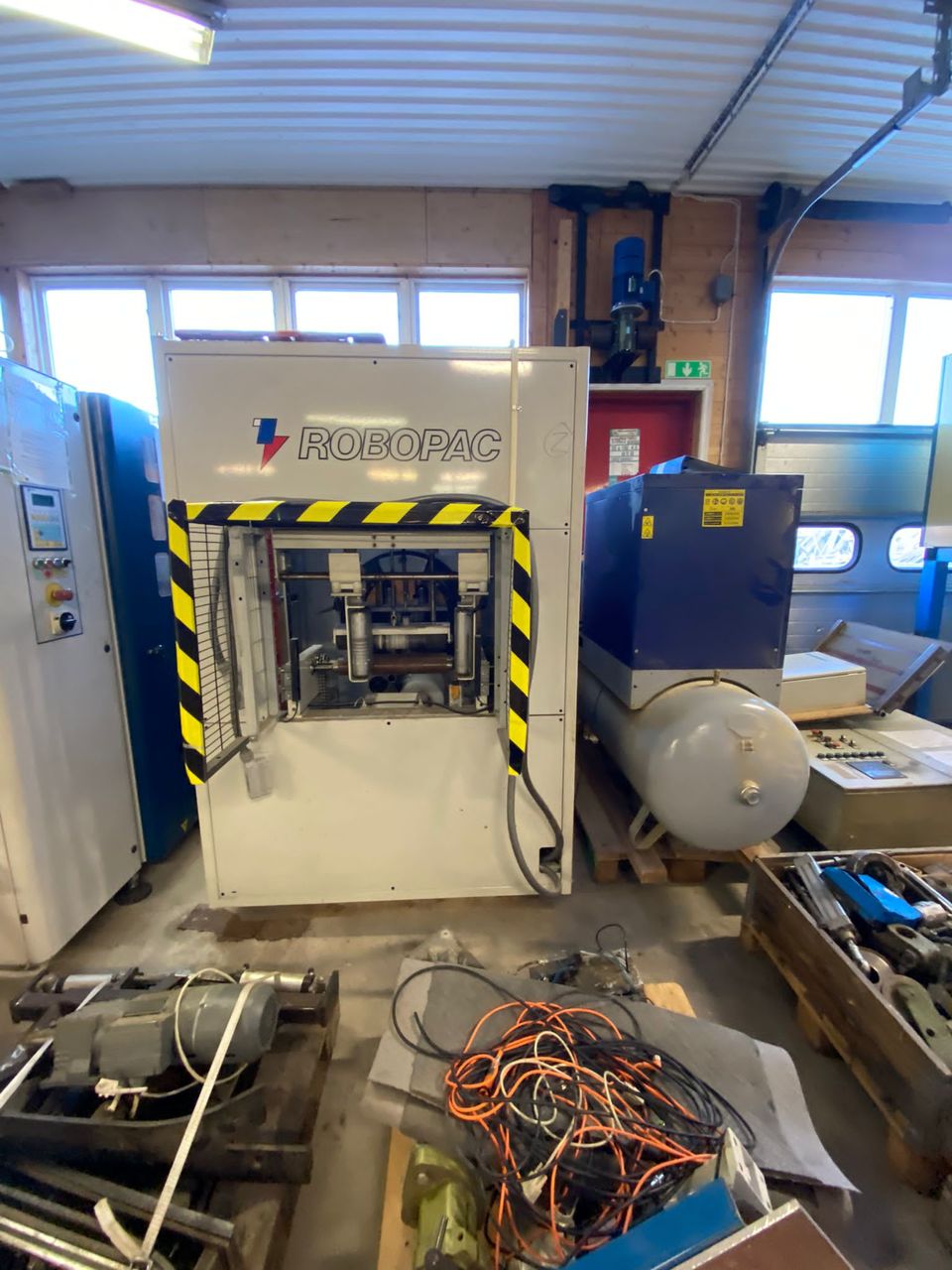
Maintenance & Care: Extending the Lifespan of Joinery Machines
In a high-throughput joinery shop or sawmill, machines rarely get a break. Wrappers, roof-hatch machines and cross-cut saws run day after day, often in environments filled with dust, wood chips and moisture that take a heavy toll on both mechanics and electronics. A structured maintenance schedule is therefore not a luxury — it's a necessity for avoiding unplanned downtime and costly repairs. In this article, we go through concrete routines that keep joinery machines in top condition, whether it's a robot-controlled wrapper or a classic cross-cut saw.
Why maintenance of joinery machines is often overlooked
Many workshops focus their maintenance resources on the heavy saws and planers, while surrounding joinery machines — such as packaging and loading equipment — get less attention. The problem is that these machines are often critical to the overall flow. If a wrapper stops at the end of the production line, it quickly creates a bottleneck further back in the chain, even if the sawing itself runs perfectly.
A machine like the Wrapping machine (Robopac), for example, contains both mechanical moving parts and electronic control systems. Without regular attention, the risk increases that film stretching, rotation or sensors start to malfunction — often gradually, until the machine eventually stops completely mid-shift.
Basic routines that apply to most joinery machines
Regardless of the specific machine type you're working with, there are a few maintenance principles that are always relevant:
1. Dust is the enemy. Joinery environments generate fine wood dust that easily penetrates bearings, chain drives and electrical cabinets. Blow or vacuum machines regularly, especially around motors and control cabinets. Avoid high-pressure washing directly on electronics.
2. Lubrication on a schedule, not by feel. Many breakdowns are caused by dry bearings or chains that have run without sufficient lubrication for too long. Find the manufacturer's recommended lubrication intervals and set up a simple checklist for operators to follow weekly or monthly.
3. Check fasteners and vibration. Machines that work with moving parts, such as a Roof-hatch machine (Randek), are subject to constant vibration. Over time, screw joints can loosen, which in turn increases wear on other components. A quick visual inspection every week is often enough to catch problems early.
4. Keep an eye on electrical connections. Dust and moisture combined with vibration can cause connectors and cabling to loosen or corrode. Check fuses, contactors and cable glands at least once a quarter.
Specific maintenance points for cross-cut saws
Cross-cut saws are often used intensively in continuous production, making them particularly sensitive to wear if maintenance is neglected. On a Cross-cut saw, you should especially watch:
- Blade condition and tension. Dull or poorly adjusted blades increase strain on the motor and bearings, and also result in poorer cut quality.
- Guide rails and sliding surfaces. These should be kept clean and lightly lubricated to avoid jamming, which in turn wears down the drive mechanism.
- Dust extraction at the blade. Effective extraction not only reduces workplace safety risks but also prevents chips from accumulating in moving parts.
A good tip is to let the same person be responsible for daily inspection of the cross-cut saws. Continuity in who keeps an eye on the machine makes it easier to catch deviations early, before they develop into costly stoppages.
Build a simple maintenance schedule that's actually followed
The most common mistake isn't a lack of knowledge about maintenance, but a lack of structure. Many workshops know exactly what should be done but lack a system that ensures it actually gets done. A working maintenance schedule doesn't need to be complicated:
- Daily inspection – simple visual check and cleaning, performed by the operator.
- Weekly lubrication – according to manufacturer recommendations, logged in a record.
- Monthly deeper inspection – checking fasteners, electrical connections and wear parts.
- Annual review – preferably with an external service technician for major checks and any replacements.
Documentation is key. By keeping a simple log of maintenance performed, it becomes easier to spot patterns — for example if a certain component wears out faster than expected, which could indicate an underlying issue with settings or operation.
Extended lifespan means direct profitability
It's easy to see maintenance as a cost, but in practice it's an investment with a quick payback. A machine that runs with proper lubrication, a clean environment and regular checks often lasts significantly longer than the manufacturer's expected service life. This reduces the need for expensive spare parts, reduces unplanned downtime, and delays the need for new investments.
For workshops that have already invested in used equipment — which is common in both sawmills and joinery shops — maintenance routines become especially important. Used machines can have many remaining years of production left in them, but only if they're cared for properly from day one.
FAQ
How often should bearings and chains on joinery machines be lubricated? This varies between machine types, but a general recommendation is weekly lubrication under intensive operation. Always follow the manufacturer's specification when available, and adjust the interval if the machine runs in a particularly dusty or humid environment.
What signs indicate that a joinery machine needs urgent maintenance? Unusual noises, increased vibration, motor overheating, or visible wear on drive belts and chains are clear warning signs. Reduced precision in cutting or wrapping can also indicate that control systems or mechanical parts have started to fail.
Can maintenance be handled in-house, or is a service technician required? Much of the routine maintenance — cleaning, lubrication and visual inspection — can be handled internally with proper training. More advanced work, such as adjusting control systems or replacing critical components, should often be done by a certified technician to avoid warranty issues and safety risks.