 RICHARD
Maintenance & care: extending the life of your finger-joint saw
A finger-joint saw (lamella saw) is one of those machines in a joinery or sawmill that often flies under the radar when it comes to maintenance. It works quietly, day after day, handling finger-joint and lamella splicing of timber with high precision. But that very precision is what makes it sensitive – small deviations in setting, lubrication, or cleanliness quickly lead to lower joint quality and, in the worst case, costly downtime. In this article we go through concrete maintenance routines that extend the life of your finger-joint saw, whether you run an older SM 80 or a newer model.
Why finger-joint saw maintenance differs from other machines
Unlike a bandsaw or planer, where wear often shows up directly in the surface finish, a finger-joint saw can run for a long time with hidden problems before they become noticeable. The joints may look visually acceptable but have reduced strength due to incorrect pressure, wrong knife geometry, or insufficient lubrication of the feed system. That makes regular, systematic inspection even more important than on many other machine types.
Daily routines
- Cleaning feed tracks and grippers. Resin, chips, and dust easily get stuck in moving parts and cause uneven feeding. A quick wipe-down at the end of the shift prevents unnecessary wear.
- Checking air pressure and hydraulics. Most finger-joint saws, including models of the SM 80 type, rely on correct pressure to press the lamellas together with the right force. Too low pressure gives weak joints, too high pressure wears out seals prematurely.
- Visual check of knives/milling tools. The finger-joint profile is crucial for joint strength. Inspect the tools daily for chips, resin build-up, or visible wear.
Weekly checks
- Lubrication according to the manufacturer's schedule. Many forget lubrication points hidden behind protective plates. Go through the lubrication schedule once a week, not just when the machine "feels sluggish".
- Checking belts and drive chains. Tension and wear on belts affect feed speed and, by extension, joint quality.
- Cleaning sensors and gauges if the machine has automatic length measurement or quality control. Dust buildup causes false readings.
Monthly and seasonal measures
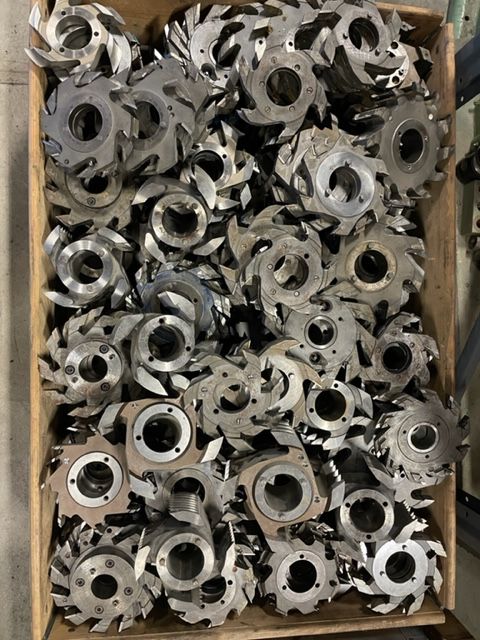
- Replacing or resharpening milling tools. Dull tools increase the load on the motor and bearings, and give worse joint geometry. Many breakdowns can be traced back to tools that should have been replaced weeks earlier. If you need new or resharpened tools, it's worth checking out a range of planer cutters, round cutters, and knives – the right tools in good condition make a big difference for both lifespan and the final result.
- Checking linear and angular alignment. Joints that sit crooked or fit poorly are often caused by the machine's reference surfaces shifting over time. Careful realignment every 1–2 months prevents rejects.
- Changing hydraulic oil and filters according to the manufacturer's intervals, especially important in dusty environments where particles otherwise wear down pumps and valves.
Annual review
At least once a year, the entire machine should be reviewed by someone with technical experience of finger-joint saws:
- Full check of electrical components and wiring.
- Review of all bearings in the feed system.
- Calibration of press pressure and length measurement.
- Documentation of condition – especially relevant if the machine will ever be resold.
If you're comparing several finger-joint saws, for example a finger-joint saw of the SM 80 model against a similar SM 80 finger-joint saw in different condition, the maintenance history is often what determines which machine gives the most value over time – not just price and year of manufacture.
Common mistakes that shorten lifespan
- Running with dull tools for too long. It's tempting to "make do" for a couple more weeks, but the load on the entire machine increases, wearing out components that are far more expensive to replace than the tool itself.
- Wrong lubricant or too infrequent lubrication. Always follow the manufacturer's recommendations – generic industrial oils don't always suit the finger-joint saw's specific mechanics.
- No logbook. Without documentation it's hard to spot patterns in failures, plan maintenance, or prove the machine's condition in case of a future sale.
- Dusty environment without adequate extraction. Chips and dust accumulating in the machine are among the most common causes of premature wear on bearings and electronics.
Maintenance as an investment, not a cost
For a sawmill or joinery running the finger-joint saw in multiple shifts, every hour of downtime is a direct cost. A structured maintenance schedule – daily, weekly, monthly, and annual – is the single most cost-effective measure for keeping production running. This is especially true if the machine already has some years behind it and was bought used; then access to the right spare parts and an understanding of the machine's specific wear points is crucial.
At Richard.se we often see that machines resold with a complete maintenance history hold both a higher resale value and are easier to sell. That's a good argument for starting to document maintenance today, regardless of the machine's age.
FAQ
How often should I replace or resharpen the milling tools on a finger-joint saw? It varies with run time and timber type, but a rule of thumb is to check the tools weekly and plan for replacement or resharpening every 4–8 weeks under continuous operation. Hard or resin-rich timber wears tools faster.
What signs indicate a finger-joint saw needs service before joints start failing? Uneven feeding, audibly increased motor noise, vibrations in the press tool, and visible resin buildup on knives are early warning signs that should be addressed before joint quality deteriorates.
Is it worth investing in maintenance on an older, used finger-joint saw? Yes, in most cases. Basic routines for lubrication, cleaning, and tool replacement are relatively cheap compared to the cost of downtime or having to buy a new machine prematurely.