 RICHARD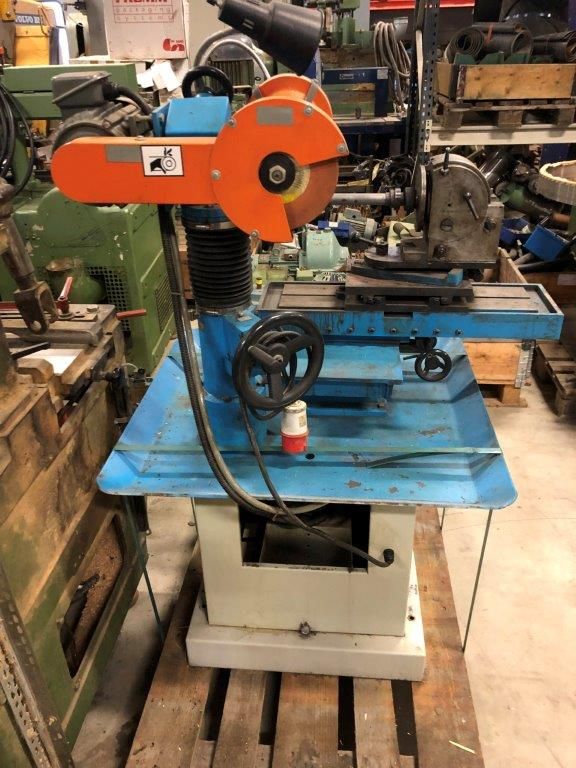
Grinding Machines: How to Compare Models and Vintages
Choosing the right grinding machine for your sawmill or joinery is a decision that affects production quality for years to come. The differences between brands and vintages can be significant — in technology, capacity and reliability alike. This article walks through what to look for when comparing used grinding machines, whether you need a universal machine for blades and saw teeth or a specialized machine for planer knives and profile tools.
Why model and vintage matter
A grinding machine is a precision tool. Unlike, say, a band saw where wear is often visible at a glance, the true condition of a grinding machine can be harder to judge without knowing what to check. Older machines can be mechanically robust but lack the fine adjustment and automation found in newer models. Newer vintages more often offer digital control, faster setup times and better repeatability — increasingly important if you run many different steel profiles or short batches.
Six points to compare between models
1. Machine type and application Grinding machines are broadly divided into universal machines, blade grinders, and tool grinders for planer/cutter knives. A universal machine, such as a Holytek model (see /en/maskiner/RP-08017), offers flexibility but may lack the precision needed for specific steel profiles compared to a dedicated grinder. Consider what you actually grind most before comparing machines purely on price.
2. Brand and reputation Quality differences between brands are often more pronounced in grinding machines than in many other machine categories. Names like Wadkin, Weinig, Stehle and Jonsered have long stood for high precision within the Swedish sawmill industry, while newer manufacturers from Asia often compete on price and features rather than track record. A machine like /en/maskiner/RP-08013 (Weinig R 912) represents a line well known in the industry for stable grinding geometry, making it easier to evaluate than a less established brand.
3. Spindle precision and bearing quality Regardless of vintage, the condition of the grinding spindle is decisive. Check whether bearings have been replaced, whether there is runout in the spindle, and how the machine sounds when idling. A well-maintained older machine with replaced bearings can be a better buy than a younger machine that has been run hard without maintenance.
4. Control: manual, semi-automatic or CNC Vintage often dictates the degree of automation. Purely manual machines require more operator skill but are simpler to troubleshoot and repair yourself. Semi-automatic and CNC-controlled machines allow faster changeovers but can become expensive to service if the electronics are outdated or spare parts are hard to source.
5. Coolant and dust handling This is an area where the difference between old and new designs is often noticeable. Newer machines usually have better integrated coolant handling and dust extraction, which both extends tool life and improves the working environment. If a machine lacks a functioning coolant system, that should be factored in as an additional investment in the total cost.
6. Accessories and adjustment options Combi machines, such as /en/maskiner/RP-08011 (RK Kombi 11), can grind several types of tools with different attachments. This makes them attractive for smaller and mid-sized operations that want to keep the number of machines in the workshop low, but it's important to verify that all attachments and chucks are included in the purchase.
A practical comparison checklist
- What type of steel and profiles do you grind most today, and in two years?
- Is the machine built for series production or one-off work?
- Is there service history, and when were bearings/spindle last replaced?
- What is the availability of spare parts for this specific brand?
- What does a comparable new machine cost, and how much real savings does the used alternative represent?
Going through these points for every machine you're considering makes it far easier to compare like with like, even when vintages differ by decades.
When is an older model the better choice?
It's a common misconception that newer is always better. For a smaller joinery that grinds the same type of steel year after year, an older, mechanically simple machine — such as in the style of /en/maskiner/RP-08016 (Jajod M 360) — can be both cheaper to buy and simpler to keep running long-term, since it lacks the complex electronics that can become a bottleneck for future repairs.
Conversely, if the business is growing or frequently switches between different steel profiles, a newer machine with better adjustment options can quickly pay back the price difference through shorter setup times and less waste.
Summary
Comparing grinding machines isn't just about the year on a price tag. Brand, construction, service history and application often weigh more heavily than age alone. By structuring your comparison according to the points above, you get a far more reliable basis for choosing the right machine for your specific operation — whether the choice falls on a robust classic or a more modern, automated solution.
FAQ
Is a newer grinding machine always a safer buy than an older one? Not necessarily. An older machine with documented maintenance and replaced bearings can be more reliable than a younger machine that has been run hard without service. Condition matters more than the model year.
Which type of grinding machine suits a smaller joinery best? If needs vary between different tool types, a combi machine can be most cost-effective, while a dedicated machine often provides better precision if you grind the same profile in large volumes.
How do I determine if spare parts are available for an older model? Contact the dealer or manufacturer directly and ask whether components like bearings, chucks and control boards are still manufactured or available as compatible replacements before making a decision.