 RICHARD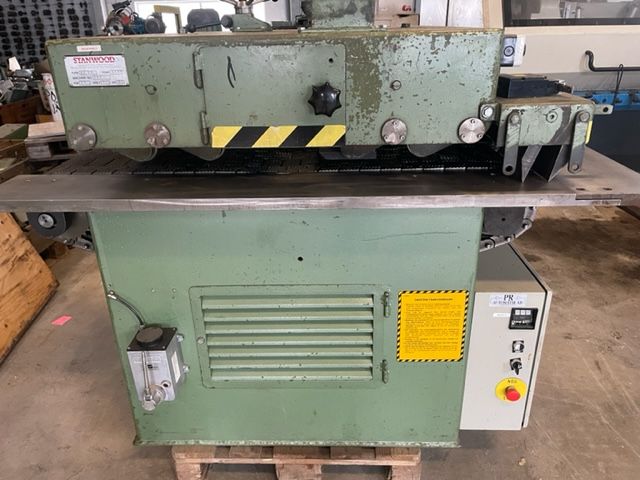
Common faults on multi-rip saws and how to troubleshoot the machine type
The multi-rip saw (lamella saw) is a central machine in many sawmills and joineries, splitting planks and boards into thinner strips with high precision and minimal waste. That same precision makes the machine sensitive to wear, misalignment, and neglected maintenance. In this article we go through the most common faults on multi-rip saws, what usually causes them, and how to troubleshoot step by step before you call a technician.
1. Crooked or uneven strips
The most common complaint about a multi-rip saw is that the cutting result comes out crooked, that strip thickness varies, or that the surface becomes wavy. The cause almost always lies in one of three things:
- Worn or warped blades. Check blade runout with a dial indicator or by rotating it by hand against a fixed reference point. Even 0.2–0.3 mm of runout leaves visible marks in the timber.
- Misaligned guides. Feed rollers and side fences should be parallel to the blade plane. Measure with a ruler or laser at both ends of the table — a discrepancy between measuring points is a clear signal.
- Uneven feed pressure. If the rubber rollers are unevenly worn or pressure differs between the infeed and outfeed side, the timber will drift during cutting. Run a test board with the power off and feel for uneven friction.
If you run several multi-rip saws in production, for example a machine of the SM 80 multi-rip saw type, it's worth doing a quick comparative measurement between the machines — if results differ despite identical timber, that points to a machine fault rather than the material.
2. The blade burns or binds in the timber
Burnt wood along the cut surface, or the saw binding mid-workpiece, is often a sign of:
- A dull blade. A multi-rip saw normally runs at high feed speed, so dull teeth quickly generate heat. Sharpening history matters — note operating hours since the last sharpening.
- Wrong hook angle or tooth pattern for the timber type. Hard heartwood requires a different geometry than sapwood-rich material. Check that the blade is correctly chosen for the current assortment.
- Insufficient chip evacuation. If chips aren't transported away efficiently, they pack into the kerf and cause friction. Check the fan, ducting, and that no chips have accumulated inside the machine housing.
If blades need regular sharpening, it's often smarter to have a fixed flow to a sharpening machine (Weinig R 912) rather than running blades until they're really bad — worn blades in turn wear more on bearings and the motor.
3. Unusual noise, vibration, or overheating
Vibration in the blade shaft, abnormal noise from bearings, or the motor becoming unusually hot after a short run time should always be taken seriously:
- Unbalanced blade. A blade that has lost a tooth or worn unevenly creates imbalance that's clearly felt in the handle or table.
- Bearing wear. Listen for scraping or grinding sounds at idle. Replace bearings proactively — a failed bearing that breaks down during operation can damage the shaft and housing.
- Belt tension. On belt-driven models, a too-loose belt causes slipping and heat buildup, while an over-tensioned belt wears out bearings prematurely.
Stop the machine immediately at unusual noises. Continuing to run a multi-rip saw with early-stage bearing damage is the most common reason a relatively small repair turns into an expensive breakdown.
4. Feed problems — timber stalls or feeds unevenly
- Worn feed rollers. The rubber surface hardens over time and loses grip. Test the grip by hand — it should feel clearly tacky, not smooth.
- Misadjusted pneumatic or spring pressure. Check system air pressure if the machine is pneumatically controlled.
- Dirt and resin buildup in guide slots. Clean regularly with a suitable agent — resin builds up unusually fast in multi-rip saws since the cut surface is large relative to the timber volume.
Systematic troubleshooting — step by step
- Observe the symptom carefully — crooked strip, burn marks, noise, or stalling. The symptom points toward a specific part of the machine.
- Check the blade first. It's the most common culprit and the easiest to swap or sharpen to rule out.
- Measure the geometry — guides, fences, and feed rollers should be parallel and level.
- Listen and feel at idle before running timber — vibration and noise reveal a lot without risking material.
- Log operating hours and sharpening intervals so you can spot patterns over time rather than reacting to isolated incidents.
Preventive maintenance reduces the number of faults
Most faults on a multi-rip saw can be prevented with a simple schedule: daily cleaning of chips and resin, weekly blade condition checks, and monthly geometry checks of guides and feed rollers. A good tip is to keep a logbook per machine, especially if you run several units, for example both an SM 80 multi-rip saw (ID RP-07002) and a sister machine — deviations show up quickly when you compare figures between machines.
Age and prior overhaul history also matter when assessing a used machine. A machine that has been run hard without documented maintenance is more prone to recurring faults even after an initial service.
FAQ
How often should the blade on a multi-rip saw be sharpened? It depends on timber type and run time, but a common rule of thumb is every 40–80 operating hours for softwood. Watch cut quality and power draw as early warning signs before the blade becomes fully dull.
Can I troubleshoot feed problems myself without opening the machine? Yes, largely. Check the rollers' rubber surface, air pressure in the pneumatic system, and that no chips or resin residue are stuck in the guide slots — these points usually require no tools at all.
Is vibration always a sign of bearing failure? Not always, but it's the most common cause together with an unbalanced blade. Try swapping the blade first before suspecting bearings, since it's simpler and cheaper to rule out.