 RICHARD
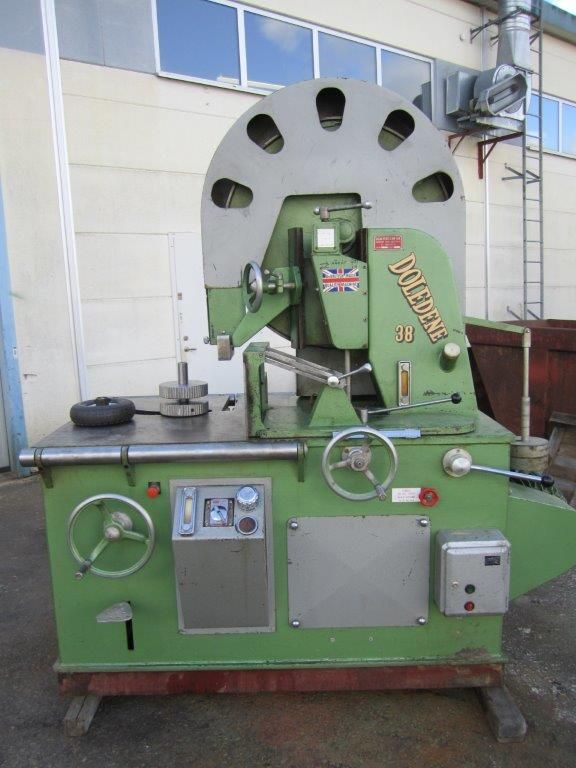
Buying guide: what to check before buying a used band saw
The band saw is often the heart of the sawmill or joinery workshop — whether it's used for splitting logs, ripping timber, or precision cutting in a furniture shop. A used band saw can be a great deal, but only if you know what to look for. A faulty band saw quickly becomes an expensive problem in the form of downtime, blades wearing out fast, and quality issues in the cut.
This guide walks through the most important points to check before you sign the deal — whether it's a smaller workshop band saw or a large log band saw with carriage for the sawmill.
1. Frame and wheel condition
The band saw's frame and wheels are the foundation for everything else. Check for:
- Cracks and weld repairs in the frame, especially at mounts and bends.
- Wheel balance and rubber coating. Cracked or uneven rubber causes uneven blade tension and shorter blade life.
- Bearings in the wheel shafts — listen for unusual noise and feel for play when the saw is switched off.
A warped frame or damaged wheels are rarely cheap to fix, so be extra critical here. Models like the Doledene DS 38 (/en/maskiner/RP-05015) are known for robust construction, but even a good machine can show wear after years of operation — always ask to see the wheels run without a blade so you can assess runout and balance.
2. Blade tension and guiding
The blade tensioning system determines how straight and stable the cut will be. Check:
- That the tension indicator (if present) works and shows correct readings.
- That blade guides, rollers and glide shoes are not heavily or unevenly worn.
- That the blade tracks correctly on the wheels without wandering during operation.
Poor guiding shows up immediately in the cut result — crooked timber, vibrations and unnecessary blade wear. On twin band saws, such as the AKE 1400 (/en/maskiner/RP-05013), it's especially important that both sides are synchronized, otherwise the product will come out skewed.
3. Motor, transmission and drive system
The band saw's motor and drive belts need to handle the load the machine is rated for. Ask about:
- Power ratings and whether the motor is original or replaced.
- Condition of drive belts, V-belts and couplings.
- Any fault codes or history from the control system, if the machine has a frequency converter or PLC control.
A modified or undersized motor may work fine under light use but become a bottleneck with tougher timber or higher capacity demands. Ask for service history — a seller who can show a log book or maintenance receipts is often a sign the machine has been well cared for.
4. Feed system and carriage (for log saws)
For larger log band saws, such as a log band saw with carriage (/en/maskiner/RP-05016), the condition of the carriage is crucial for productivity:
- Check rails, wheels and guides on the carriage — wear here causes uneven feed and reduced precision.
- Test clamps and turning mechanisms to ensure the log stays stable throughout the cut.
- Inspect the hydraulic or electrical system controlling feed speed.
A carriage that binds or has play makes it hard to hold dimensions, no matter how good the blade and motor are.
5. Electrical system and safety equipment
Older band saws may have electrical systems that don't meet today's requirements. Check:
- That emergency stops, guards and blade covers are present and functional.
- Condition of the wiring — brittle or damaged cables are a warning sign.
- Whether the machine is CE-marked or needs adaptation to meet local workplace safety regulations.
This is not just a safety matter but also an economic one — a machine that needs major electrical work to be approved can quickly eat up the savings you made on the purchase price.
6. Test run — always do it
No buying guide beats an actual test run. Ask to:
- Cut the same type of timber you intend to use the machine for.
- Measure the straightness and surface finish of the cut.
- Listen for unusual noises both idling and under load.
A machine that sounds good and cuts straight during a test run gives you far more confidence than any paper history.
7. Price relative to condition and capacity
Finally — always compare the price to the machine's actual condition, not just brand and model year. An older but well-maintained machine, such as a Canali TB 1100 (/en/maskiner/RP-05010), can be a better buy than a newer machine with poorly documented maintenance. Factor in potential costs for new blades, servicing or electrical upgrades into your total calculation before deciding.
FAQ
How do I know if the band saw's wheels are in good condition? Run the wheels without a blade and look for runout, unevenness or cracks in the rubber coating. Also listen for unusual noise from the bearings — often the first sign of wear.
Is it worth buying a used twin band saw compared to a single band saw? It depends on your production needs. A twin band saw offers higher capacity but requires more careful synchronization and maintenance on both sides — check extra carefully that they are in the same condition.
What documents should I always ask for when buying a used band saw? Ask for service history, any inspection reports, and information about original power rating and manufacturing year. This gives you a better basis for assessing the machine's actual condition.