 RICHARD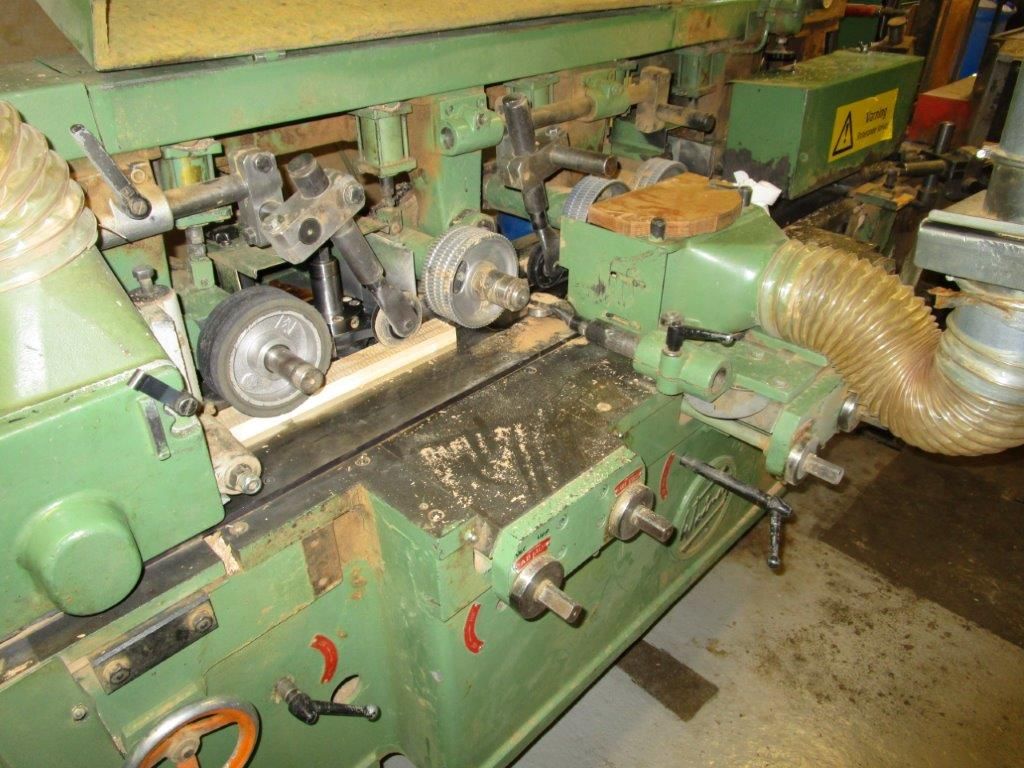
Why Buying a Used Planer Moulder Makes Sense
A planer moulder is one of those workshop machines that lasts for decades when it's looked after properly. Buying a used planer moulder instead of a new one makes sense for more than one reason - the price is lower, and branded machines from manufacturers like Weinig and Waco are built to run for decades with the right maintenance. Before you sign anything, there's a set of points worth going through carefully, whether the machine is being sold by a private owner, a sawmill scaling down, or a machinery dealer. This guide covers what you actually need to check - not just how it looks in a photo.
Many of these machines have already proven themselves in production over the years, and a well-maintained used planer can cover your needs just as well as a new one - often at a fraction of the cost. The point of this guide is to help you tell the difference between a machine that merely looks fresh and one that's genuinely in good condition throughout, regardless of how many years it has on the clock.
Feed Rollers, Table and Vibration - What to Test Under Load
The feed system is the heart of a planer moulder, and its condition decides how evenly timber runs through the machine. The rubber feed rollers are usually in decent shape even on older machines, but get down and check them for cracks and glazing - a glazed roller loses grip and causes uneven feeding even if it looks fine from a distance. Also check that the feed runs smoothly all the way through and doesn't stutter or lose pace when you run a thicker board through the machine - uneven feeding at that stage is harder to fix than simply swapping a single worn roller.
The table matters just as much. Cast-iron tables are preferred over aluminium because timber glides better across cast iron, and you'll notice it immediately in the feed. Lay a straight steel rule or a level across the table and check for flatness - a table that isn't flat creates defects before the timber even reaches the cutter block, no matter how good the rest of the machine is. Also check the table's edges and mounting points against the frame - play there affects precision just as much as flatness itself, and it's easy to miss if you only feel around the middle of the table.
Always ask to test-run the machine under load, not just idling. Run a board through it and listen for vibration and cutter chatter. Vibration under load leaves planer marks in the timber that you'll then have to sand out by hand - a clear sign the bearings or cutter block need looking at before you buy. Ask the seller whether the machine has had a recent cutter change or spindle service - the answer tells you a lot about how well the machine has been looked after over the years.
Knife Locking, Dust Extraction and Power - The Technical Details That Decide Daily Use
The knife locking mechanism has to hold the blades firmly under full load. Check that the locking mechanism isn't worn and tightens properly. Just as important: make sure planer knives and cutter blocks are still available for that specific model - an otherwise perfect machine isn't worth much if you can't get spares for it.
Strong dust extraction combined with compressed air for cleaning is, in practice, a requirement for running the machine efficiently. Measure the extraction port diameter on the machine and compare it against your own setup before you decide, so you don't get a surprise at installation.
Check the power supply too: most planer moulders in this class run on three-phase power, and you should match motor output against your actual production. An underpowered motor caps your capacity, while an oversized motor just costs more to run without giving you anything extra. Also check that the guards, alarms and emergency stop actually work - it only takes a minute on site and quickly reveals whether the machine has been maintained carelessly, even if it looks fine otherwise.
Want to see examples of branded machines built this way - we have the Weinig U 17 in our range and the Waco 225, both common reference points when talking about planer moulders in this segment.
Service History, Logistics and Economics
Always ask for a full service history - who used the machine, for what, and how it was maintained. Ask for logged running hours if they exist. A seller who can answer those questions specifically has usually looked after the machine well.
Don't forget logistics. A planer moulder weighs a fair amount, and the move should be planned with hauliers experienced with machinery relocation - the wrong lift or the wrong transport can damage both the table and the cutter block on the way home. Find out too whether the machine comes with manuals, spare parts lists or contact details for previous service technicians - that kind of documentation saves time the day you need help or spares yourself.
Financially, buying used is often a smart move specifically for planer moulders. Branded machines from Weinig and Waco hold their value well, and according to industry forums for used woodworking machinery, many owners recoup a large share of their investment when the machine is sold on. That means a well-maintained used planer is often a safer purchase, economically, than it first appears. The WACO HM225/3000 is an example of a model that tends to hold its resale value steadily. Want to compare more options before deciding, browse our full range of machines.
FAQ
How do I know if the rubber feed rollers need replacing?
Check the rubber for cracks and glazing, and test the grip by hand. Then run the machine under load - if the feed becomes uneven or the timber slips, that's a sign the rollers are wearing out.
Is a cast-iron table always better than aluminium on a planer moulder?
In most cases, yes - timber glides better across cast iron, giving a more even feed. But condition matters just as much as material, so always check flatness regardless of table type before you buy.
What should I ask the seller before buying a used planer moulder?
Ask for the service history, running hours, and details on who used the machine and how it was maintained. Also confirm the dust extraction port diameter and whether planer knives and cutter blocks are still available for that model.