 RICHARD
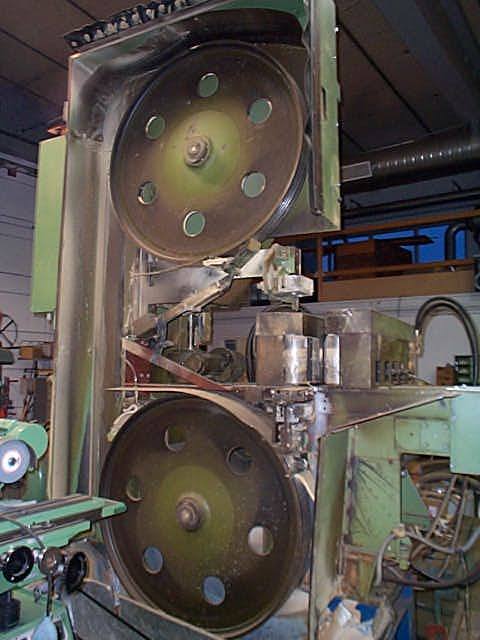
Bandsaw Tips & Tricks From the Shop Floor
A bandsaw is often the heart of the sawmill or joinery, but it's rarely the machine's specifications that decide the final result. It's the technique, the routines, and the small adjustments that make the difference between a straight, even cut and a blade that wanders, burns, and wears out prematurely. Here we share tips gathered from shop floors across the country – whether you're running a simple bandsaw like the Canali TB 1100 or a powerful twin-blade bandsaw such as the AKE 1400.
Choose the right blade for the job
It sounds obvious, but this is the most common cause of poor results. A tooth pitch that's too coarse on thinner timber gives rougher surfaces and more waste, while a pitch that's too fine on large logs risks packing sawdust in the gullets and burning the wood. As a rule of thumb:
- Large dimensions and high feed speed → larger tooth pitch, deeper gullet.
- Fine cuts and thinner material → smaller tooth pitch, lower feed speed.
- Hard, knotty timber → harder steel or stellite-tipped blades that hold their edge longer.
Many underestimate how much blade choice affects the whole machine's lifespan. A blade that doesn't match the material puts extra strain on guides, bearings, and drive wheels – which costs more in the long run than the blade itself.
Tension and guiding – the foundation of a straight cut
Insufficient blade tension is the most common culprit behind crooked cuts and wandering blades. Check tension according to the manufacturer's instructions, and do it regularly – tension can drop after temperature swings in the shop, especially in unheated buildings during winter.
Guide blocks should sit close to the blade without pinching it. Guides set too tight heat the blade unnecessarily and dramatically shorten its life, while too much play lets the blade wander in the cut. A good practice is checking the guides every morning before the first log goes in, especially on machines running multiple shifts.
Lubrication and cooling keep the blade cool
Heat is the blade's worst enemy. A blade running hot loses hardness, stretches, and loses tension during operation – which in turn causes worse cuts in a vicious cycle. Make sure the coolant or lubrication system works as it should, that nozzles aren't clogged, and that flow actually reaches the blade where it's needed, near the cutting edge.
On older machines, such as a log bandsaw with carriage, nozzles can easily shift position or hoses stiffen and crack after years of operation. A quick weekly check saves both blades and production downtime.
Feed speed – listen to the machine
Experienced sawyers listen just as much as they watch. A sound that suddenly gets heavier, or a motor working harder, is often the first sign that feed speed is too fast for the current material. Running too fast doesn't just wear the blade – it also strains drive wheels, bearings, and the motor.
A good habit is letting new employees practice feeling the difference between a machine working normally and one that's overloaded, before letting them run at full production pace unsupervised.
Twin bandsaws – synchronization is critical
If you're running a twin-blade bandsaw, synchronization between the two cutting units is crucial. If the blades aren't perfectly parallel and at the same height, you'll get uneven dimensions in the timber, which shows up immediately in the next production step – for example in the planer. Check parallelism regularly, especially after blade changes or servicing, and log deviations so you can spot patterns over time.
Daily and weekly routines that pay off
Most downtime can be prevented with simple, recurring checks:
- Daily: Check blade tension, guide blocks, and that the cooling system works.
- Weekly: Lubricate bearings and links on schedule, clear sawdust gullets, and inspect drive wheel rubber coating for cracks.
- Monthly: Measure parallelism and guide alignment, especially on machines in heavy use.
Consider documenting this in a simple maintenance checklist on the wall next to the machine. It's easier for the whole team to stay on top of, and it becomes obvious if a fault keeps recurring.
Common beginner mistakes
- Changing the blade but forgetting to adjust the guides for the new blade's thickness.
- Running at full feed right after a cold start, before the machine has warmed up and oil has distributed through the system.
- Ignoring small vibrations – often the first sign of imbalance in drive wheels or bearings.
- Skimping on coolant to "save money," which ultimately costs more in blade wear.
A closing thought from the shop floor
What separates a productive bandsaw line from one that's constantly stopping is rarely the machine's age or brand – it's about habits. The right blade, correct tension, good cooling, and attentiveness to the machine's sound do more for results than most technical upgrades. Consider scheduling a short review with staff once a quarter to go through these points together.
FAQ
How often should I change the bandsaw blade?
It depends on material, feed speed, and blade type, but a good guideline is to check the edge sharpness every shift and change or sharpen the blade before cut quality noticeably declines – waiting too long strains the whole machine.
Why does the blade wander in the cut despite correct tension?
If tension is correct but the blade still wanders, check guide block position and wear, drive wheel rubber condition, and that the blade is properly welded without irregularities at the joint.
Can I use the same blade for both thin timber and large logs?
You can, but the result is rarely optimal for both. A medium tooth pitch works as a compromise, but for best results and longest blade life, separate blades matched to dimension are recommended.