 RICHARD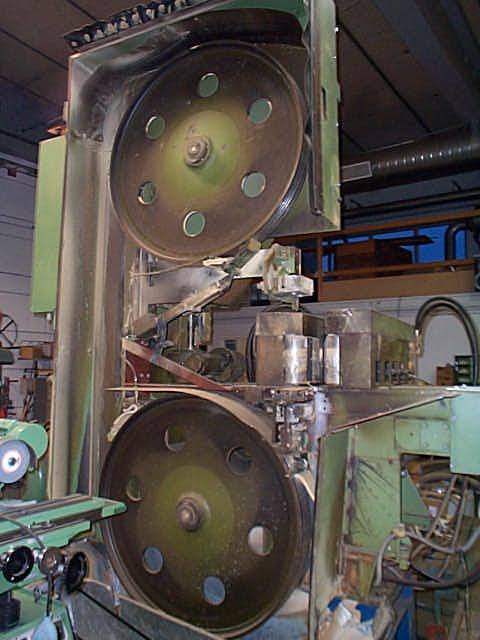
Band Saw: How to Compare Models and Vintages
Choosing a band saw for your sawmill is rarely about finding the "best" machine in an absolute sense. It's about finding the right machine for your production, your volume, and your budget – and this is where models and production years differ more than you might expect. A band saw from the 1990s can in some cases still be an excellent choice, while a newer model may be overdimensioned or wrongly configured for your needs. Here's what you should actually look at when comparing used band saws.
Start with your production need, not the machine
Before comparing specific models, you need clarity on what type of timber, dimensions, and volumes the machine must handle. A simple band saw for smaller batches has completely different requirements than a double band saw intended for continuous operation in a production line. Ask yourself:
- What's the maximum diameter and length of logs/workpieces you need to handle?
- How many cuts per shift do you need to maintain your capacity?
- Will the saw run standalone or be integrated into an existing line?
Only once you have these answers does comparing models become meaningful.
Single band saw, twin band saw, or double band saw?
Band saws in this category vary greatly in configuration. A classic single band saw, such as the Canali TB 1100, suits sawmills that want flexibility and simple operation without investing in an entire production line. Twin configurations, like the Canali ML 1100 Twin, allow simultaneous cuts and can significantly increase capacity without requiring double the floor space.
A double band saw, such as the AKE 1400, is built for continuous, high capacity and suits sawmills with stable volume and a need for consistent quality in every cut. The investment cost difference between these configurations is often substantial, but so is the capacity difference – always compare cost per cubic meter produced, not just purchase price.
For operations handling logs directly rather than finished blanks, a log band saw with carriage is another option worth comparing – here the carriage's precision and speed often determine productivity more than the blade itself.
Production year says less than maintenance history
It's easy to fixate on age when comparing used machines, but a ten-year-old band saw that has been carefully maintained can be in better condition than a five-year-old machine run hard without service. Instead, look at:
- Service logs and replaced wear parts (bearings, guides, wheels)
- Condition of the band wheel rubber coating – cracks and hardness reveal age regardless of the year
- Adjustment mechanisms for blade tension and guidance – wear here reduces cut quality
- Motor power relative to the machine's original specification, especially if the motor has been replaced
Brands like Stenner, Robinson, and Doledene have been on the market for a long time and generally have good parts availability, making older vintages of these more attractive than equally aged units from lesser-known manufacturers.
Technology that separates generations
The difference between an older and a newer band saw is often about control and automation rather than raw power. Newer models more often feature:
- Digital readouts and preset cutting programs
- Automatic blade tensioning and adjustment for temperature changes
- Easier blade changes and fewer manual adjustment points
These features can save significant time in operation, especially with frequent product changes. But they also add components that can fail and may be more expensive to repair on an older machine where the electronics no longer have full support. Always weigh what a potential electronics fault would cost to fix before choosing an older model with advanced controls.
Capacity in numbers – what you should actually compare
When pitting models against each other, gather these key figures for each candidate:
- Maximum cutting width and height
- Feed speed at full capacity
- Motor power (kW) and blade speed (m/min)
- Blade width and recommended blade dimension
- Floor space and foundation or vibration damping requirements
Laying the numbers side by side in a simple table quickly reveals which machines actually compete with each other, and which really belong to different capacity classes despite similar pricing.
A test run beats a datasheet
No datasheet replaces a test run. Listen for uneven noise from band wheels and bearings, check that the cut surface stays even throughout the cut, and ask to saw a sample similar to your own material. Differences between models and vintages that look small on paper can become significant in practice – especially regarding cut precision at higher feed speeds.
Summary
Comparing band saws is about matching configuration, condition, and technology against your actual production – not about finding the newest or most well-known model. Determine your production need first, then compare concrete capacity figures and maintenance history between candidates, and always finish with a test run before deciding.
FAQ
Is an older band saw always a worse choice than a newer one? No. An older machine with good service history and available spare parts can perform better and be more reliable than a newer machine with poor maintenance. Focus on condition and capacity rather than just the production year.
How do I know if I need a double band saw instead of a regular band saw? If your volume requires continuous operation with consistent cut quality and you already have a stable timber inflow, a double band saw is usually justified. For more varied production, a single or twin configuration is often sufficient.
What's most important to check during a test run? Listen for uneven noise in band wheels and bearings, check the evenness of the cut surface throughout the cut, and test with a sample matching your own material to see how the machine handles real load.