 RICHARD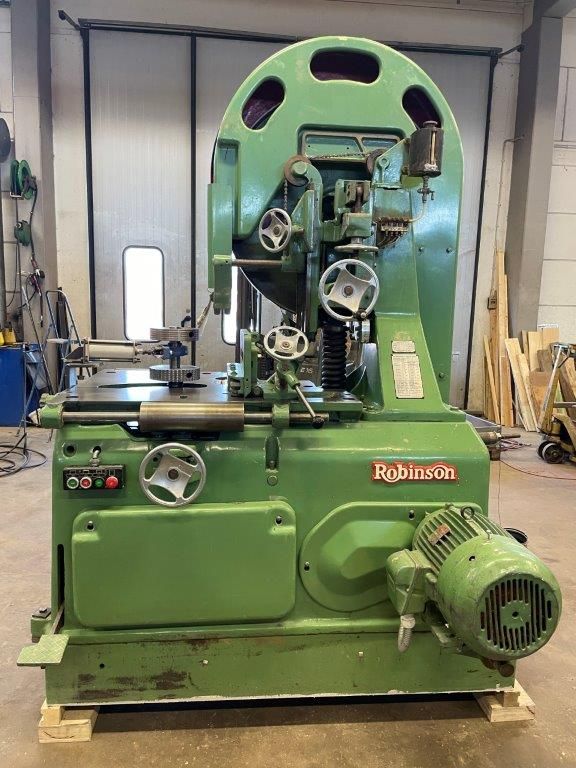
Band Saws in Daily Use – Knowledge That Saves Production
A band saw is the heart of many sawmills and joineries, but it's also a machine that punishes neglect harshly. Wrong blade tension, poor guiding, or a dirty wheel can lead to crooked cuts, increased waste, and unnecessary downtime. We've talked to experienced sawyers and gathered the best tricks for getting maximum lifespan and precision out of both classic band saws and log band saws.
1. Correct Blade Tension – Every Time
The most common mistake on the shop floor is adjusting blade tension "by feel" instead of using measuring tools. Too little tension causes vibration and crooked cuts; too much wears out bearings and unnecessarily stretches the blade. Many older machines, such as a Band Saw (Canali TB 1100) [/en/maskiner/RP-05010], have manual tension adjustment where a simple tension gauge makes an enormous difference. Check the tension daily at startup, especially if the machine is located in a room with varying temperature – steel moves more than you'd think.
2. Guide Bearings and Guide Blocks – Replace Before It's Too Late
Worn guide bearings are the silent killer of production. The blade still looks perfectly fine, but the cut surface becomes wavy, and you'll end up with rejects further down the process. A good rule of thumb is to inspect guide bearings weekly and listen for a faint scraping sound at idle – usually the first sign that the bearings are starting to fail. On log band saws with a carriage, such as the Log Band Saw With Carriage [/en/maskiner/RP-05016], the guiding is under extra strain since logs are often uneven and heavy. Here, a fixed service schedule pays off more than on lighter machines.
3. Wheel Cleaning – The Easiest Win
Resin and sawdust that stick to the band wheels create small irregularities that the blade has to adapt to, which in turn wears down both the blade and the bearings. A steel brush and a scraper go a long way, but make it a routine – not something you only do once the problem already shows in the timber. Many workshops do a quick wheel cleaning alongside blade changes, saving time compared to treating it as a separate task.
4. Choosing the Right Blade for the Job
It's tempting to run the same blade regardless of wood species or dimension, but the wrong tooth pitch increases both energy consumption and the risk of blade breakage. Coarser teeth for wetter, fresher timber; finer teeth for dry and hard material. If you process a lot of varying timber, it may be worth keeping two blade sets ready instead of compromising with a single universal blade.
5. Complement With the Right Peripheral Equipment
A band saw rarely works in isolation. The material flow before and after the saw affects both safety and productivity. A Cut-off Saw (Waco KS-200) [/en/maskiner/RP-06003] combined with the band saw makes it possible to cut to the correct length before sawing, reducing waste and easing handling of short pieces. Also make sure conveyor and roller tables are correctly aligned in height – misalignment here creates unnecessary strain on both operator and machine.
6. A Daily Checklist Works
The workshops with the least downtime are rarely those with the latest technology – they're the ones with the best routines. A simple daily checklist with five points (tension, guide bearings, wheel cleaning, blade condition, oil level) takes under five minutes but catches most problems before they become costly.
7. Staff Training Is Cheapest in the Long Run
Many of the most expensive breakdowns don't come from machine failure but from incorrect handling. New operators should always go through the basics of blade tension, material feeding, and emergency stops before running the machine on their own. The investment in a half-day of internal training pays itself back quickly through fewer rejects and less downtime.
8. Plan Maintenance Based on Usage, Not the Calendar
A machine run in three shifts wears faster than one used sporadically. Instead of following a generic service interval, log operating hours and base maintenance on actual usage. This gives a more accurate picture of when bearings, blades, and belts need replacing.
Summary
Band saws are robust machines, but they require continuous attention to perform at their best. Correct tension, clean wheels, good guide bearings, and a well-thought-out material flow are the difference between a saw that delivers consistent quality year after year and one that constantly requires emergency interventions. Combine this with the right peripheral equipment and a simple daily routine, and you get a production line that maintains both quality and pace.
FAQ
How often should I check the blade tension on my band saw? Check the tension at least daily at startup, and more frequently if the room has large temperature variations, since steel moves with temperature.
What are the signs that guide bearings need replacing? Common signs include wavy cut surfaces, a faint scraping sound at idle, and the blade wandering despite correct tension. Replace them before cut quality becomes a production issue.
Can I use the same band saw blade for all wood species? You can, but it's not optimal. Coarser teeth suit wetter timber while finer teeth give better results on dry, hard material – keeping two blade sets ready saves both time and quality.